Monday, May 23, 2016

Special Report: LA CHARTER SCHOOL UNDER REVIEW AFTER PRINCIPAL CHARGES $100K ON CREDIT CARD + EL CAMINO CHARTER PRINCIPAL IS HIGHEST-PAID IN LA COUNTY, 2ND IN STATE


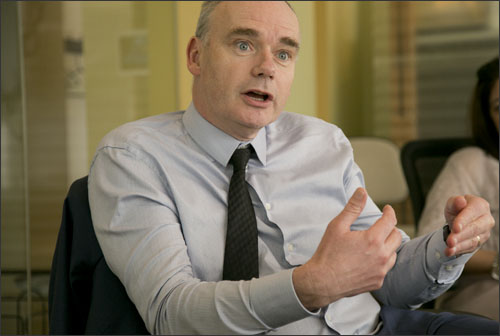
David Fehte, at left, is the principal of El Camino Real Charter High School. The school board cancelled his and other administrators’ credit cards at a meeting Wednesday. Dean Musgrove/Staff Photographer

By Mike Reicher, Los Angeles Daily News | http://bit.ly/1XsuOHD

Posted: 05/22/16, 7:39 AM PDT  ::  Just a 10-minute drive from the school, the waiter brought the table a $95 bottle of fine Syrah wine. Dimly-lit Monty’s Prime Steaks & Seafood, with its red booths and white linen, doubled as a high school meeting room that Wednesday night, Principal David Fehte says. And on many other nights.

In 2014 and 2015, Fehte, who leads El Camino Real Charter High School in Woodland Hills, charged more than $15,500 at Monty’s to his school-issued American Express card.

“When we’re doing business, we’re doing business,” Fehte said recently as he walked to his BMW in the San Fernando Valley campus parking lot.

He also paid for first-class airfare and luxury hotel rooms with his school-funded credit card.

Fehte acknowledged charging El Camino for personal travel and, after the Daily News inquired, said he reimbursed the public school.

Over the two years, Fehte charged more than $100,000 to the card, according to a Los Angeles Daily News analysis. El Camino receives about $32 million in government funds annually, accounting for 94 percent of its revenue.

“Before, I was just concerned. Now I’m angry,” said El Camino mother Marlene Widawer, who began looking into the school’s finances after hearing concerns from teachers and other parents. “Here are the people responsible for ensuring our kids are getting the best education possible, and they’re doing this?”

The school hired a financial crisis firm after the Los Angeles Unified School District first questioned the principal’s charges and those of other administrators in October 2015. Now, El Camino’s board of directors is planning to hire a forensic private investigator or auditor to review expenses. Last week, the board voted to cancel Fehte’s card and all but one of the other administrators’ credit cards.

All told, Fehte and four other administrators spent more than $1 million with their school-issued credit cards during the two years. The vast majority of charges were for typical school supplies such as textbooks, computers, sports equipment and furniture. But Fehte spent liberally with his platinum card, while sometimes paying for other people. The Daily News obtained credit card statements and preliminary account data under the California Public Records Act. The documents show that Fehte charged:

• More than $6,700 for a four-day trip to the Michigan headquarters of Herman Miller, the designer furniture manufacturer. Fehte and two other school employees flew first class and stayed in $359 hotel rooms on their journey to view classroom furniture. Herman Miller, meanwhile, has an L.A. showroom 25 miles from the school.

• Fehte, combined with other administrators, charged more than $5,700 for flowers over the two years. He sent a $75 floral arrangement with red roses to the school’s human resources manager. The note read, “Happy Birthday, Terri! Love, Dave.”

• Personal trips to Greensboro, North Carolina, and Spokane, Washington. On one of the North Carolina trips, he flew first class. On another, he charged the school nearly $800 for two nights at a hotel, including a charcuterie plate with cheese, olives and a bottle of red wine. Fehte this month acknowledged they were personal charges.

• When the school’s Academic Decathlon team traveled to Hawaii for the 2014 national championships, Fehte bought himself and assistant principal Yvonne Halski first-class tickets at $1,890 each. The rest of the school contingent flew economy.

See the receipts:

Two of El Camino Principal David Fehte’s Monty’s meals
Fehte’s first-class travel to Hawaii
Charcuterie, wine and hotel in North Carolina


In September 2015, LAUSD’s charter school division sampled some of El Camino’s checks and credit card statements and found charges that violated the school’s own policies, said L.A. Unified central business adviser Aaron Eairleywine. Fehte’s expense reports were approved by his subordinates, for instance, instead of a board member, as required by the school’s policy.

Because of the violations, the district downgraded El Camino’s financial rating from a 4 to a 1, the lowest score possible, despite the school’s healthy balance sheet. Every year, L.A. Unified ­— which oversees charter schools in its boundaries — rates charters on various measures, from governance to student achievement. Serious financial mismanagement could lead to a charter revocation, Eairleywine said. Though it hadn’t reached that point, the district ordered El Camino to quickly reform its fiscal policies. Eairleywine added that the problems may not cross any legal boundaries.

“There is nothing here that indicates they have done anything outside the law,” he said late last month. “We’re not done with the review yet, but we don’t expect it will yield anything along those lines.”

El Camino’s own auditors in November 2015 also noted the administration had significant problems with its credit card charges and expense reimbursements. But after that, Fehte continued to spend on meals and travel, the records show, albeit at a slower pace. He declined to sit down for an interview.

The school’s board of directors revised its financial handbook in December and hired more accountants in response to the district’s findings. In a written statement, the board members said they support Fehte and other administrators while they are “working to update our policies to comply with the ever-changing regulations applied to public schools.”

Board Chairman Jon Wasser wants more details about credit card expenses when submitted to the board for approval. Until at least January, the school staff presented board members with only the total amount of each card statement, with descriptions like “miscellaneous” and “Amex.” The school is operated by a nonprofit corporation called the El Camino Real Alliance, which is governed by the board of directors. They have fiduciary responsibility over the public funds.

“We are moving towards more oversight,” said Wasser, a board member since August 2014 and chairman since October. “I have what was handed to me, and I’m moving forward with changes.” El Camino Real serves about 3,900 students in the wealthy community of Woodland Hills. High performing on standardized tests, the school is perhaps best known for its seven U.S. Academic Decathlon championships. Just 18 percent of students last school year were eligible for free or reduced price meals — a common indicator of poverty — compared with 76 percent districtwide.

The key question about a charter school employee’s expenditures, experts say, is whether they were made for school business.

“When you use a credit card for personal use, that is a gift of public funds,” said Deborah Deal, who has audited other charter schools for a state agency and is the assistant superintendent of business services at Azusa Unified School District. “Knowing that you used it for personal purposes — that’s where it crosses the line.”

Fehte reimbursed El Camino for 13 expenses marked “personal” on monthly recaps. They totaled $3,317 over the two years, according to preliminary account data provided by El Camino. Those included purchases at Costco, a boat rental company, and a room at the Marina del Rey Marriott.

But other charges, which Fehte told a reporter were personal, showed no record of reimbursements. His Washington airfare and North Carolina lodging, food and airfare were charged in “error” to his school card, Fehte wrote.

“I should have used my personal credit card,” Fehte, 55, said in one written response. “The staff preparing my credit card recap assumed it was school-related and did not bring it to my attention.”

After this news organization asked about the expenses, school administrators said Fehte reimbursed El Camino for “inadvertent credit card charges.”

They did not provide documentation of the payments when asked. Fehte said he repaid the $95 wine purchase, a $56 charge for a rented BMW 328i, the Washington state and Greensboro airfare, and hotel bills from North Carolina and Ventura Beach.

Personal spending “is inappropriate and does not align to the purpose for the use of the public credit card,” Eairleywine wrote in a letter to the school.

Charter school administrators caught using credit cards for personal charges have faced steep consequences. In 2013, the founders of nearby Ivy Academia were found guilty of embezzlement and misappropriation of public funds for using a school American Express card to buy expensive dinners in the San Fernando Valley and other items a judge deemed unrelated to school business.

An outright prohibition on personal charges could force El Camino to discipline employees who made innocent mistakes, said Marshall Mayotte, the school’s chief business officer. So, despite the district’s protest, El Camino intends to continue allowing personal expenses to be charged but reimbursed quickly, he said.

Mayotte called the district’s scrutiny “nitpicky” and cast the situation in broader terms about charter school efficiency.

“If they have unnecessary staff, that’s not a waste of tax dollars,” he said of L.A. Unified, “but if we have one too many meals, that’s a waste of taxpayer dollars?”

Fehte, a former college basketball coach, was the state’s second-highest paid executive director or principal of a public school in 2014, according to the most recent data published by the state controller. He made $221,475 in wages.

Fehte became principal of El Camino in 2005 and led the effort to convert the school to a charter in 2011. In recent years, he worked to expand the school to other campuses but has been rebuffed by district officials.

To plan the expansion and discuss other education issues, Fehte said, he hosted dinners at restaurants such as Mastro’s Ocean Club in Malibu. All the meals were related to school affairs, Fehte maintains.

“If you want to have a business meeting on the school dime, you go to Coco’s or Denny’s or to Stonefire Grill,” said Widawer, who has a son in ninth grade and two other children who graduated from El Camino. “You go somewhere reasonable. You don’t go to extravagant meals.”

It’s up to a charter school’s board to establish guidelines for meals and other credit card expenditures, said Alice Miller, managing director of knowledge management for the California Charter Schools Association. El Camino’s fiscal policy approved in 2013 said meals while traveling should be at the “lowest rate available,” but it did not address in-town meals. The 2016 handbook does not cover the cost of in-town meals, but said travel meals could be up to $80 per day on average.

“My sniff test,” Miller said about board policies, is “how would they feel if this was the headline in the local newspaper?”

Fehte submitted meal charges without documenting who joined him, what they discussed, or how many people ordered food. School policies didn’t require it at the time. Fehte sometimes dined at Monty’s twice a week, spending an average of about $260 a meal. A handful of the Monty’s charges exceeded $500.

“Usually it’s just him and a couple other people,” said Monty’s General Manager Lee Chandler. “He’s one of our favorite customers.”

They would typically bring their own wine, Chandler said. While the state education code prohibits employees at traditional public schools from spending public funds on alcohol, the Charter Schools Act provides an exemption from the code.

Under El Camino’s 2016 financial policies, employees are required to pay for alcohol with personal funds. Also, credit card holders must submit itemized receipts and details about their meals. But documents show Fehte, through March 2016, submitted nonitemized receipts.

Airliners’ first-class cabins are also places to “collaborate” on school business, Fehte said. On the flight to Herman Miller, where round-trip tickets cost $930 each, he and other staff discussed a 10-year classroom renovation project, Fehte said. It was important to travel to Michigan, he added, to perform “due diligence by visiting the factory” and to work face to face with the company’s education specialists.

For a student robotics contest in Louisville, Kentucky, Fehte bought himself $2,451 of business-class and first-class airfare.

Before the school’s new fiscal policies were implemented, the handbook provided no guidance on airfare. Now, the rules stipulate flights may exceed coach prices by up to $200 each direction, and can be more expensive if the employee has a medical need. Fehte says he has a medical condition but declined to disclose its nature.

El Camino administrators say they should not be judged on particular expenses, but on the bigger picture ­— how much money they save each year. The school had $14 million in net assets last fiscal year.

“Basically, they’re saying mismanagement of funds,” said Mayotte, the chief business officer, “when we saved $4 million last year.

__________________

SAN FERNANDO VALLEY CHARTER PRINCIPAL IS HIGHEST-PAID IN LA COUNTY, 2ND IN STATE


By Mike Reicher, Los Angeles Daily News | http://bit.ly/1syiBWc

05/22/16, 7:42 AM PDT  ::  El Camino Charter Real High School Principal David Fehte was paid $221,475 in wages in 2014 ­— more than any other principal or executive director of a public school in Los Angeles County, and the second-highest in the state, according to the most recent data published by the state controller.

The highest paid was the executive director of Pacific View Charter School in Oceanside. The third highest, nearby Granada Hills Charter High School executive director Brian Bauer, made $211,188. That school has a larger student enrollment — with 4,480 students this year compared with El Camino’s 3,855 — and more total employees.

Fehte says that he performs more duties than a typical school principal because he has a lean administrative staff. El Camino, for instance, has 23 office or clerical staff members, according to state Department of Education statistics, compared with Granada Hills’ 30.

“That’s a valid point, but that would be listed in their job description,” said Alice Miller, managing director of knowledge management at the California Charter Schools Association.

Fehte did not provide a copy of his job description when asked.

For the 2015-2016 school year, El Camino’s board of directors voted to raise Fehte’s base salary to $215,000 from $180,060, but to eliminate his potential for bonuses and incentives, which had boosted his previous year’s pay. Bauer at Granada Hills also now makes $215,000, according to a school official there.

The chairman of the El Camino Real Board of Directors, Jon Wasser, said that he was comfortable raising Fehte’s pay based on a comparison survey of other schools’ leaders. Provided to the board by one of Fehte’s subordinates, that comparison included the heads of private schools and major charter school networks. The CEO of High Tech High in San Diego, with 13 campuses from kindergarten through high school, was on the list. He was paid $330,115. El Camino has one main high school campus and a continuation school.

“The truth is that a director with multiple schools would have multiple principals and an army of assistant principals,” Wasser wrote in response to questions. “The fact Mr. Fehte and other administrators handle a large amount of work, with what is a relatively low number of administrators, I believe the board’s decision was valid.”


Mike Reicher is an investigative reporter for the Los Angeles News Group with a focus on government accountability. Reach the author at mike.reicher@langnews.com or follow Mike on Twitter: @mreicher.

Wednesday, May 18, 2016

YET ANOTHER POOR SCORECARD FOR CALIFORNIA'S PRESCHOOL PROGRAMS: State spent $45 million more on early education last year and only enrolled 298 more kids in preschool


94203 full
Photo by Corie Howell via Flickr Creative Commons

May 12 2016  ::  Even though California spent $45 million more on early education last year than it did the year before, the state only managed to enroll 298 more kids in preschool.

That's one of the findings that led the National Institute for Early Education Research (NIEER) at Rutgers University to rate the state 28th for early education in its latest annual report.

The annual report is a national snapshot of how states are doing with preschool access and quality. For California it examined the state preschool program, which is available only to low-income children. (The California Department of Education does not count any four-year-old enrolled in Transitional Kindergarten (TK) in its preschool category, as it sees this as the first of a two-year kindergarten program, so TK students were not included in this report.)

California does best when it comes to the number of 3-year-olds in early education, ranking ninth in the nation. But it’s downhill from there.

The state not only hovers in the bottom half of all states for 4-year-old access, it also does poorly when held to scrutiny against a range of quality standard benchmarks. Every year NIEER evaluates preschool quality through a set of general benchmark standards. These include teacher qualification level and access to in-service training, class size, staff to child ratios, and systems in place to monitor and oversee quality.

Of the 10 quality benchmarks, California only met four in 2015: The state does have comprehensive early learning standards in place; its teachers do have access to at least 15 hours per year of in-service training; teachers are required to have an early education specialization training; and the state’s programs meet the one teacher to ten child ratio.

However, there are six more areas where the state fails to meet high quality standards, from unregulated class sizes, to low teacher qualification expectations, to not providing screening for support services children may need. The state preschool programs do not all provide meals to children in the program, and the program does not have comprehensive program monitoring in place.
California has never met more than four standards in all the years NIEER has done this study, going back to 2003.

In the 2015 report, neighboring states do better: Oregon meets nine out ten benchmarks and Nevada meets seven out of ten.

The California Department of Education did not respond to KPCC’s request for comment regarding why the state fails to implement stand quality benchmarks before publication.
For 2015, the model preschool states were New York, New Jersey, Washington D.C., Oklahoma and West Virginia, according to the report's authors. These states have highly qualified teachers, strong curriculum and high expectations of children and teachers.

They also demonstrate a “continuous improvement of the system,” said NIEER’s director, Steve Barnett, as well as “how to rapidly increase quality and access at the same time.”

One area that the report focuses on is teacher pay. California’s preschool teachers are not expected to have the same credential – a bachelor's degree – as elementary teachers and are not paid on par with their public school counterparts. In five states, including Missouri, Oklahoma and Tennessee, preschool teachers are paid the same as elementary teachers.

California does slightly better by its non-English speaking preschoolers. It allocates extra dollars and requires an in-home assessment in the child’s home language. Yet that’s not enough, Barnett said.
“Given California’s large Hispanic population, it’s crucial that the state put a strong dual language learner policy in place,” he said.

While NIEER reports have consistently found the state's preschool program to be wanting, previous studies have also criticized the state for its quality and access.

CALIFORNIA IMMIGRANT KIDS GAIN STATE-FUNDED HEALTH CARE REGARDLESS OF LEGAL STATUS

127658 full

May 16 2016  ::  Children and teens brought illegally to the United States gained access to publicly funded health care Monday as California began allowing young people to sign up for the state's health care program for the poor without regard to their immigration status.

State officials expect as many as 185,000 children under age 19 to join Medi-Cal in the first year — about three-quarters of the estimated 250,000 eligible youth. About 121,000 will be automatically transferred from a limited version of the program that provides only emergency care, giving them the full range of medical, dental, vision and mental health coverage available for little or no cost with full-scope coverage.

In a rally outside the state Capitol, health care and immigrant rights advocates celebrating the expansion turned their attention to their next goals. They want Medi-Cal — the state's version of Medicaid — to cover income-eligible adults who migrated illegally and are pushing to allow those who make too much money to buy private coverage through the state's insurance exchange, Covered California.

"While Congress remains gridlocked with stereotypes and hateful rhetoric, California remains as a hopeful beacon that tells people, 'Immigrants, you matter. Immigrants, you contribute to our economy. Immigrants, you are people that deserve to have health care,'" said Sen. Ricardo Lara, D-Bell Gardens, who wrote the legislation authorizing the expanded coverage.

Critics question why California lawmakers are spending time and money to help people who immigrated illegally when there are American citizens in need.

"This acts as a magnet to the world — bring your children, bring your families to California illegally and you will get free health care," said Robin Hvidston, executive director of the activist group We the People Rising.

In his revised budget proposal published last week, Democratic Gov. Jerry Brown included $188.2 million to cover the children and teens expected to get full-scope Medi-Cal coverage. While the federal government pays about half the cost of providing Medi-Cal benefits to citizens and legal immigrants, the state is covering the entire price tag for those who immigrated illegally.

More than 13 million Californians are enrolled in Medi-Cal, about a third of the state's population. The total state share of Medi-Cal funding is about $17.7 billion

Joe Mangia, president and CEO of St. John's Well Child & Family Center in Los Angeles, said the center has about 2,500 kids who will be eligible for the expanded coverage, and expects about 1,000 already have emergency Medi-Cal.

He said they've been reaching out to families to tell them about the option and set up appointments starting on Monday for people to come in and enroll. Health promoters have also gone out into the community to tell people about the program, he said.

Until now, St. John's has treated the kids but now they'll get much better and expanded care.
"Before, if there was a specialty need, we'd refer to the county, maybe they'd get seen in six to nine months," he said.

State officials have been working to make the transition smooth and will be watching for any implementation problems they need to address, Department of Health Care Services Director Jennifer Kent said in a statement last week.

"We're delighted at this chance to expand comprehensive health coverage to reach thousands more California children," Kent said.

PEARSON CEO FALLON TALKS COMMON CORE, RISE OF ‘OPEN’ RESOURCES, DEFENDS ROLE IN LAUSD iPAD FIASCO + smf's 2¢

John Fallon

May 16, 2016  ::  Few corporate brand names in education are as recognizable, and as polarizing, as Pearson, the giant education provider whose reach extends to virtual schools, testing, language training and an array of other areas.

Many educators these days see Pearson as the embodiment of commercial businesses’ continued push to turn profits from public schools. Pearson has been criticized for everything from its deployment of curriculum in districts’ 1-to-1 technology programs to the prominent role it plays in high-stakes testing.

Yet by its financial measures—including its $7 billion in annual revenues—Pearson is clearly providing products and services that are in demand in many schools, districts, and states, and among individual parents.

Pearson CEO John Fallon recently met with a group of reporters at Education Week’s offices and spoke about his company’s business strategies and record, and offered a defense against some of its detractors’ claims. He also talked about how he thinks policy shifts like the implementation of the common-core standards and the adoption of “open” educational resources are likely to affect the K-12 market, and his company’s work.

Here are takeaways from Fallon’s remarks in response to questions from a group of reporters, edited for brevity and clarity.

Pearson officials have been talking about shifting away from being identified as simply a publishing company for years now. Fallon described the scope of the company’s reach in different areas of K-12, higher education, and professional training.

Pearson’s annual revenues stand at about $7 billion, of which 50 percent come from courseware/content, in K-12, higher education, and across the professional space, Fallon said. Those resources are increasingly delivered in digital form. Thirty percent of the company’s revenues come from assessments of one kind or another, which includes professional certification and apprenticeship programs, as well as summative exams.

High-stakes testing, specifically, produces “less than 10 percent of our revenues, but feels sometimes like it generates 150 percent of the news flow,” quipped Fallon. 

The remaining 20 percent come from services provided to schools and colleges, including virtual schools, [and] online program management at universities, he said. A Pearson business motto is “content plus assessment, powered by technology, equalizes effective learning at scale,” Fallon said, and after years of striving for that goal, “we only feel that it’s really now starting to come together.”
The company’s approach is to “define what we do by the outcome, not by where it happens physically,” he said. Pearson will continue to support “some pure online programs,” Fallon added, and “online program management and virtual schooling are two of the biggest areas of growth for the company. The weight of the activity will be in blended learning, and how you combine the benefits of face-to-face with purely online approaches.”

Pearson is a major player in virtual schooling, through its operation of Connections Academy and other programs. Recent studies, including one by Stanford’s CREDO project, have shown virtual schools producing poor results. Fallon was asked why parents and others should have confidence in Pearson’s online schools, despite the negative findings for virtual education.

“It’s important to speak in specific rather than general terms…It’s not always the case, but it’s fair to say there’s a disproportionate number of students in virtual schooling who are there because physical schools have failed them in some form or another. So it’s going to be important that we track value-added, or progress-added.

“We see technology as the means by which I can apply the benefits of teaching to far more people, and you can help free teachers up to spend more time with students, engaging students, learning from each other. Technology is not a panacea, it’s just a tool, and its primary value is in enhancing the power of teaching to reach more people.

“We publish studies that show the value that these programs do add. I think on the whole, the results are pretty good….But we are not complacent or satisfied, and all the time we’re looking to improve the value that is added. If you look at Connections Academy, the schools are incredibly popular with parents…[We measure the extent to which parents recommended our online programs among each other] and it receives an incredibly high rating.”

Many critics accuse publishers, including Pearson, of making exaggerated claims of having aligned academic materials to the Common Core State Standards, while having only made superficial changes.

Fallon was asked by EdWeek reporters about a review of a Pearson curriculum by the organization EdReports that gave one of the company’s curricula a poor rating for common-core alignment. Fallon official pointed a  response by the company that argued that the EdReports analysis was flawed, and he said Pearson’s overall record in aligning its materials to the common core is “very good,” overall.
“We’re very confident that our products are aligned to the common core. The principles of the [standards] are hugely empowering and inspiring for teachers and publishers as well. It moves us from a world under No Child Left Behind where we were essentially teaching and assessing a child’s mastery of mathematical formulas and equations to a world where we’re teaching and assessing a child’s ability to solve real world problems, and more sophisticated problems.”
[O]ne of the mistakes that were made around the implementation of the common core was to think you could switch from No Child Left Behind, that you could click your fingers and it would happen in one fell swoop. It will take the better part of a generation for the benefits to flow through.John Fallon CEO, Pearson
But he said the implementation of the common-core is a massive task, and that support for educators and schools in making a transition to the standards has been lacking—one of the factors that has fueled mistrust in the K-12 community. 

“You have to work with the gray—that is the day-to-day reality of the classroom. We [made] probably the biggest single investment [in the Pearson System of Courses, which] completely rethinks the way that numeracy and literacy are taught in the classroom. It would be the absolute poster child for the common core, and the new way of teaching…in the long run, it will prove incredibly liberating for the profession. But it is not a simple, straightforward thing to implement a program like that. It will take years, it will require very significant amounts of professional development. It will require you to rethink how the working day in the school operates. Those things take time.

“In hindsight, one of the mistakes that were made around the implementation of the common core was to think you could switch from No Child Left Behind, that you could click your fingers and it would happen in one fell swoop. It will take the better part of a generation for the benefits to flow through, because it’s such a fundamental step change. Frankly, where a lot of support from the teaching profession for the common core tipped over into antagonism, and concern, was because of the way the assessments were introduced. For example, there wasn’t an understanding in terms of tracking and measuring teacher performance against those standards; you needed to give a significant amount of time for it to bed down. Now, the reality is that it happened in the end, but it was done slightly late in the day, and almost grudgingly. It would have been so much better if everyone had been more open and honest about that much earlier in the process.

Big changes were required, yes, of publishers, but also huge changes in the way that schools were administered and led, and in the training of teachers. It’s a big, big change….You have to deal with the reality of life in schools…it varies by district, [there’s] variation by state, and not every school can move straight to a very different style of curriculum. It will take time.”

Fallon sees major educational benefits in the types of summative tests delivered today by Pearson and others, despite criticism of high-stakes exams, and despite frustration caused by testing breakdowns. [Pearson was recently faulted by New Jersey state officials for a disruption of that state’s assessments.]

“The move toward a world of fewer, better, smarter assessments that provide more actionable data more quickly to teachers and parents is important. We would say that an assessment should be only one measure of progress. It should be part of a richer dashboard, a more holistic view.
“We’ve been talking for 20 years about the convergence of formative and summative assessment, something the Every Students Succeeds Act makes more valid…that is something in our sights, something that is possible, in psychometric terms, in terms of technology—fewer, better, smarter assessments, and quicker, better feedback for teachers, parents, and students.”


John Fallon

McGraw-Hill Education got out of high-stakes testing entirely last year. Given the continued controversy around summative exams, and periodic problems associated with giving them, could you see a day where Pearson says goodbye to high-stakes testing entirely?

“Just to put it in context, Pearson successfully conducted 15 million on-screen tests last year. We did, as you know, have a problem in New Jersey, and we’re sorry about that. But the tests resumed the next day, and have been very effective since then. Our onscreen testing is very reliable, secure, it works, and we can provide much richer data, and we can provide useful information back to teachers and parents. And it’s what enables formative and summative assessment to converge. It’s much harder to see that if we go back to the world of paper and pencil, bubble tests….they’re not fit for what we need to prepare young people….to apply things to the real world.
“I can’t speak for other companies, but I have a lot of confidence in the reliability of our online assessments. Secondary, they will enable what most people in the education world want to see happen.”

Pearson was one of the companies, along with Apple, that was faulted as the Los Angeles Unified school district’s 1-to-1 iPad program, faced technical breakdowns and backlash. Pearson’s common-core aligned curriculum was supposed to come pre-loaded on iPads, and the company was criticized by those who said it wasn’t ready. The company recently agreed to pay more than $6 million to the district.

Fallon would not comment on the specifics of the settlement, but said this when asked about what lessons the company learned in L.A.:

“Moving to 1-to-1 learning, to where the role of the teacher becomes much more one of coach and [providing] support to children, where you’re trying to introduce more peer-to-peer learning…and do so in a technology delivered-world, that is a very different world than the reality that exists in many schools today. And it takes time. And the lessons to be learned, not just from there but around the country, are that there is still a lot of work to be done, to get really good, high-quality…e-commerce-grade tech infrastructure and experience in schools for students. That’s not to say there has been a lot progress—there has…But I think that is a prerequisite over time to giving teachers competent ways to deploy technology effectively in schools.

“And where you call it common core, or career-and college-ready standards, the ambition to the new higher standards, one that is much more around applied knowledge, is another very ambitious thing to do. You’ve got a lot going on, all at once. How you manage systemic change in those circumstances is not something you should underestimate. It will take a lot of time to do. It’s a real focus on technology infrastructure, a real focus on PD for teachers.”

And about the specific accusation that Pearson’s curriculum was not ready in time for LAUSD?
“That program has continued to be used in a number of school districts around the country, which are running pilots on it. The curriculum on it is fantastic. And if there’s any program that really did try to fully embrace the common core—and wasn’t just compliant, but went beyond—that was it.”

Many districts have embraced open educational resources—free materials created on licenses that allow their distribution, re-use, and repurposing. Fallon argued—as many providers of commercial materials have—that OER can provide benefits to some schools, but that commercial resources will continue to have value because of the tech-based enhancements, in analytics and adaptive learning and other areas, that they offer beyond academic content.

Open resources are “an important part of the landscape…Quite often, they’re used as supplements to a core teaching program. If you think about what the next generation of technology will look like, it’s a really immersive learning experience, that will provide learning analytics that enable teachers to have more actionable diagnostics that give them more personalized information around each student and creates much more personalized learning for students.

“That’s not something that can be done without continuous and sustained investment, and that investment has to funded from somewhere. Ultimately, it has to be paid for somewhere in the system. That’s why I think there will be a diversity and range of [materials]…I think there will continue to be a market for a long time to come for high-quality courseware, pedagogically sound, fantastic content, developed in a way for teachers that is an inspiration for them to teach and for students to learn, and [which is] providing much more adaptive learning and learning analytics. But it will be paid for if it demonstrates real value [in]…helping more students to be successful and make progress. If it doesn’t, it won’t, and it won’t deserve to.

“If [the education community goes] that [open] route, it’s not a free route. They will have to find a way to fund and sustain that approach. They might be able to fund it over time with voluntary labor extended over time from the teaching profession. But there’s a consequence for that; there’s only so many hours in the day, in the system…If you talk about ‘free’ in any other sector, [the resources] may be free at the point of use, but they’re being funded and paid for somewhere else. So ultimately, quality has to be paid for somewhere else.”

Photos of Fallon by Charlie Borst, Education Week’s director of photography.


smf: EdWeek is a advertiser supported trade publication. If Pearson isn't their biggest advertiser; that potential exists. Cavanagh is their Marketplace editor - we shouldn't be expecting any heavy hitting from them!   
 
When he thinks the "Pearson System of Courses" works, Fallon is supportive: "the absolute poster child for the common core," ....when it didn't (It was the vaporware on LAUSD's iPads) then: "that program has continued to be used in a number of school districts around the country, which are running pilots on it."  
 
Pilots?  Seriously??
 

Tuesday, May 10, 2016

UTLA-COMMISSIONED REPORT SAYS CHARTER SCHOOLS ARE BLEEDING MONEY FROM TRADITIONAL ONES + Report + Policy Brief + smf's 2¢

by 


May 10, 2016  2 AM  ::  A teachers union-funded report on charter schools concludes that these largely nonunion campuses are costing traditional schools in the Los Angeles Unified School District millions of dollars in tax money.

The report, which is certain to be viewed with skepticism by charter supporters, focused on direct and indirect costs related to enrollment, oversight, services to disabled students and other activities on which the district spends money.

L.A. Unified has the most charters — 221 — and the highest number of charter students — more than 100,000 — of any school system in the nation. Charter students make up about 16% of the district's total enrollment.

The union gave The Times the study in advance of its scheduled presentation at Tuesday's Board of Education meeting, with the stipulation that the report not be distributed to outside parties.

[smf: The Report and a Policy Brief Follow)


The study calculates that services to charters encroach on tax money the district intended to use for traditional schools, adding up to at least $18.1 million a year and growing.

The biggest financial problem for the district, however, is that money follows students and a huge number of students have enrolled in charters instead of traditional district schools. With more education tax dollars going directly to charters, the result is a decline of more than $500 million a year — about 7% — in the district's core budget, the researchers say.

The effects of this drop are difficult to quantify because fewer students in traditional schools also means a reduced need for teachers and other personnel.
 
But even with reduced staffing, the district faces a net loss of about $4,957 per student, the study says. That amount accounts for fixed costs, such as maintaining buildings.

Whatever the exact amount, the district has less money to spend with the flexibility its leaders would prefer or to offset legacy costs that include aging school buildings and retiree health benefits.


“The findings in the report paint a picture of a system that prioritizes the growth opportunities for charter school operators,” according to a separate policy brief co-written by the union.

Charter supporters take a different view, seeing the district as the fundamental problem and charters as an important solution.

“Like all businesses, the district has to compete for its customers,” said Eric Hanushek, a senior fellow at the Hoover Institution at Stanford University.

“The growth of charters is putting pressure on the district. The district can't do what it did in the past and come out ahead,” added Hanushek, who hadn't seen the report. “They can try to compete for the students or sell off the buildings. But the point is: Charters look attractive to parents, which means that the district is not attractive.”
 
Prompted in part by concern about the district's judgment in how it spends money, a group of philanthropists and foundations has bet big on charters in Los Angeles, subsidizing their growth over the last two decades. Last year, local philanthropist Eli Broad spearheaded a proposal to more than double the number of charters over the next eight years, hoping to reel in half of district students.
About six months ago, a group formed to develop Broad's vision for new, high-quality schools.


Meanwhile, both the district and employee unions have been trying to develop counter-strategies. From the district, the push is to increase enrollment, to compete with charters more aggressively and possibly to limit their growth. Until now, the union has been most visible at the bully pulpit, speaking at gatherings and leading demonstrations.

The new report is from Florida company MGT of America. It builds on the work of an earlier, independent district advisory panel, which concluded that charter growth is one of several factors threatening the solvency of L.A. Unified.

This latest analysis was reviewed by pro-labor Washington group In the Public Interest, which prepared the separate policy brief with the union.

“Unmitigated charter school growth limits educational opportunities for the more than 542,000 students who continue to attend schools run by the district, and … further imperils the financial stability of LAUSD as an institution,” the brief states.


The division spends about $2.9 million more than the available funding, which is limited by state law.
The report also tallies an additional $13.8 million in annual administrative costs related to charters, and $1.4 million more for work by the district's inspector general and special education division.
The full effect on services to the disabled is actually much higher but difficult to nail down, according to the researchers.
The federal government mandates that every disabled student should receive a free and appropriate education, but does not fully pay for it. The state, in turn, spreads out this funding equally between students, regardless of their disability. L.A. Unified enrolls a much higher percentage of the disabled students who cost more to educate.

“A student with a need for speech therapy might need only monthly support/monitoring that might cost the district $3,000 per year,” the report states. “A student with emotional/behavioral or health impairments with significant needs might need residential placement or daily feeding or medical monitoring and might cost the district upward of $120,000 per year.”

Schools and districts pool their resources — and share the expense — of serving disabled students, but L.A. charters don't have to partner with L.A. Unified. Some have cut costs by affiliating with another district. To keep other charters in the fold, L.A. Unified provides a special deal that essentially shortchanges the district, the report concludes.
Another indirect cost of charters relates to audits and investigations conducted by the district's inspector general. A routine audit takes three to six months and costs about $70,000. More extensive reviews cost at least twice as much.

The California Charter Schools Assn. has challenged the need for much of this work, calling many of these investigations unneeded and intrusive.

Jason Mandell, a spokesman for the association, said in an email that he could not comment on the report because he hadn't seen it. But any focus on charters, he said, was intentional misdirection away from financial problems that are of the district's own making. He noted that the earlier advisory panel study concluded that “even if charter schools didn't exist, the district would still face a crippling decline in enrollment due to entirely separate factors.”

The MGT report, which cost $82,000, doesn't fault charters, saying that the problems have more to do with state and federal policies as well as district decisions.

But in the policy brief, the union takes a more aggressive tone, arguing for changes that include full funding from the federal government for disabled students and equitable distribution of these dollars by the state; more money for charter oversight — either from the state or from charters; and charging higher district fees, where possible, to charters.


CAVEAT: L.A. Times' Editor's note: Education Matters receives funding from a number of foundations, including one or more mentioned in this article. The California Community Foundation and United Way of Greater Los Angeles administer grants from the Baxter Family Foundation, the Broad Foundation, the California Endowment and the Wasserman Foundation. Under terms of the grants, The Times retains complete control over editorial content.

 _______________


OK:  
  • Eli Broad gets what he pays for from the LA Times. 
  • UTLA gets what they pay for from MGT of America. 
  • Read on and let's see if we voters and taxpayers can get the public education for our kids we pay for from California and LAUSD.
_________________


LAUSD Loses More Than Half a Billion Dollars to Charter School Growth


New report reveals a fiscal crisis that could have deep negative implications for both district schools and existing charter schools.


TheCostOfCharterSchools.org

A report by MGT of America, an independent research firm, reveals that LAUSD has lost an astonishing $591 million to unmitigated charter school growth this year alone. If costs associated with charter school expansion are not mitigated with common sense solutions, the district will face financial insolvency, according to an analysis of the report.

As the number of independent charter schools continues to grow, it becomes increasingly important for LAUSD to quantify, forecast, and manage the costs associated with independent charter expansion. LAUSD oversees more charter schools than any other district in the country. Charters are privately managed despite relying heavily on district and taxpayer funding.

Taken together, the findings in the report paint a picture of a system that prioritizes the growth opportunities for charter school operators over the educational opportunities for all students.