Saturday, March 08, 2008

The News that Doesn't fit for March 9th


from Just Schools California - education news coverage of statewide interest compiled by UCLA/IDEA • Institute for Democracy, Education and Access.


Educators coalition formed to fight proposed budget cuts

Adolfo Guzman Lopez/KPCC

Schools administrators, labor unions and parent groups from the Southland announced Tuesday they've banded together to fight Governor Schwarzenegger's nearly $5 billion proposed cut to California's education budget.

State sanctions on bad schools won't do enough

Editorial/San Jose Mercury News

California became the first state last week to invoke sanctions against 97 school districts that have failed to show progress under the federal "No Child Left Behind" law. But for all the hoopla over "severe" and "moderate" sanctions, the state's actions won't cause much to change. Gov. Arnold Schwarzenegger and Superintendent of Public Instruction Jack O'Connell ducked a chance to knock heads in a handful of chronically mismanaged district offices. The State Board of Education, which must approve their weak plan, should consider stronger measures.The much-maligned "No Child Left Behind" law measures student improvement districtwide as well as in individual schools.

States eye looser rein on districts

More operating leeway seen as spurring local improvement.
By Linda Jacobson/Ed Week

The push to give school districts greater operating flexibility—a grassroots rallying cry eclipsed in recent years by the charter school movement—is seeing a resurgence, as states seek to spur innovation that will help raise student achievement. In Georgia, Gov. Sonny Perdue is proposing “performance contracts” that would free administrators in 15 districts from some regulatory strictures as early as next fall, if they agreed to meet achievement targets in the next three years. California is granting significant operating leeway to two large districts, Fresno Unified and Long Beach Unified, in exchange for their agreeing to work toward student-achievement goals in three areas. And Nevada Gov. Jim Gibbons envisions “empowerment schools” statewide—if the state can find the money.

View of a glass half-full

Blog by John Fensterwald/San Jose Mercury News

It’s a wonder that California students have done as well has they have, all things considered. That’s the conclusion of “Meeting the Challenge: Performance Trends in California Schools,” the lastest brief from PACE, the Policy Analysis for California Education, a joint project run out of U.C.-Berkeley and Stanford. The paper cited slow, steady academic progress by a number of measures over the past decade at a time that the proportions of poor, minority, English-learning students have grown in the state.

A key Republican sees odds dipping for NCLB renewal

House members aren’t making progress on their pledge to reauthorize the No Child Left Behind Act this year, according to a leading Republican lawmaker. “We’re in a climate where it doesn’t look very favorable to get the reauthorization done,” Rep. Howard P. “Buck” McKeon, R-Calif., told a meeting of the Education Industry Association last week. Rep. McKeon, who is the senior Republican on the House Education and Labor Committee, said he hasn’t met with Rep. George Miller, D-Calif., the committee’s chairman, to discuss the NCLB law since October.

The debate on education

By Jeffrey R. Henig/Boston Globe

IN THIS presidential primary season, the issue of education has been like Sherlock Holmes's dog that didn't bark. Education is so far off the radar screen that, in an Associated Press-Yahoo poll, it didn't even make the 18-item list when voters were asked, "How important is each of the following issues to you personally?" The real reason education has been ignored is that other issues have taken precedence. I blame the American media and public for their short attention span and for their inability to focus on more than a few issues at a time. The headlines are focused on Iraq, terrorism, the economy, and healthcare.

Defienden fondos para educación

Education funds are defended
El LAUSD perdería casi mil dólares por cada estudiante
LAUSD would lose almost $1000 dollars per student
By Iván Mejía/La Opinión

De aprobarse los recortes propuestos por el goberndor Arnold Schwarzenegger para balancear el presupesto fiscal del estado, cada uno de los estudiantes del Distrito Escolar Unificado de Los Ángeles recibirá cerca de mil dólares menos por año para su educación. Schwarzenegger presentó una propuesta de recortes para balancear el déficit presupuestario estatal de 16,000 millones de dólares para el año fiscal 2008-2009, reduciendo 4,800 millones de dólares al presupuesto para educación.
If the cuts proposed by Governor Arnold Schwarzenegger to balance the state's budget are approved, each student in LAUSD will receive approximately $1,000 less each year for their education. Schwarzenegger presented a budget cut proposal for fiscal year 2008-09 of $16,000 million dollars, reducing the education budget by $4,800 million.

Urging a public school exodus

Column by Cal Thomas/Sacramento Bee

As one group attempts to use California public schools as laboratories to assist children in "coming out" with their nontraditional sexual orientation, another is urging parents to come out from these schools and educate their children with their values at home or in private schools. Last Sunday, a group called "Exodus Mandate" (www.exodusmandate.org) began placing literature in scores of Southern California church lobbies, urging parents to take charge of their children's education and oppose attempts by activists and politicians to shape the worldview of young people, a worldview that runs counter to what many taxpaying parents believe and teach in their homes and places of worship.

Riverside Unified won't slash 154 jobs after all

By Imran Vittachin/Riverside Press-Enterprise

As many as 154 kindergarten, first- and second-grade full-time equivalent teaching positions across Riverside Unified School District won't be eliminated after all. To cheers inside a jam-packed board room, the school board voted Monday to restore the positions. The board reversed its Feb. 22 decision to cut them by eliminating the district's kindergarten through second-grade class-size reduction program for 2008-09, which would have saved Riverside Unified about $9.6 million. The reversal came after Deputy Superintendent Mike Fine said he discovered an error in his calculations and recommended the trustees vote to restore the class-size program.

Schools seek better notification on meat recalls

By Lesley Clark/Sacramento Bee

Local school districts got incomplete – and at times tardy – information about last month's massive recall of suspect beef, several school administrators told Congress on Tuesday. Testifying before a House of Representatives committee that's looking at ways to improve the safety and nutrition of school meals, Doris Rivas, the director of nutrition for the Dallas schools, said she first was under the impression that the district "did not have any of the product in question," only to learn weeks later that it did.

MUCH MORE STILL NEEDS TO BE DONE: Four Decades After Latino Students Walked Out of Their Classrooms, L.A. Schools Still Need Substantial Reforms

Op-ed in the LA Times by Mónica García

Mónica García is president of the LAUSD's Board of Education.


March 8, 2008 - The year was 1968, and students at public high schools in East L.A. were banned from speaking Spanish in the hallways -- at risk of a paddling from administrators who embraced corporal punishment. The students were overwhelmingly Mexican American; the administrators were, without exception, white. Those students struggled against a host of daily humiliations: locked bathrooms during lunchtime, severely overcrowded classrooms and teachers who told them college was not a realistic option.

That March, students from every East Los Angeles high school had had enough. In what became known as the East L.A. walkouts, or Chicano blowouts, students from Lincoln, Roosevelt, Wilson, Garfield and Belmont high schools walked out of their classes.

In the days that followed, more than 20,000 students at 15 schools walked out to protest educational inequity. Their demands were simple: Provide a fine education with equal resources so all students had a chance to attend a four-year university. The L.A. Unified School District's Board of Education was confronted with a community united in its demand for change.

The East L.A. student protest was one of the largest demonstrations of its kind. It sparked real changes, including the hiring of more Latino administrators, the right to speak Spanish on campus and a ban on corporal punishment. Greater awareness of the overcrowded and substandard facilities fostered successful efforts to build new schools on the Eastside.

But four decades later, as we honor and remember those courageous students, many of these same challenges remain.

According to a recent report by the community organization InnerCity Struggle, done in conjunction with UCLA's Institute for Democracy, Education and Access, only 16 out of every 100 ninth-graders enrolled in a high school on the Eastside graduate eligible for college. Sixty-four out of 100 drop out. These grim statistics threaten to worsen as our educational system statewide faces the largest budget cuts we have seen in recent times. (California already ranks 46th in the nation in per-pupil spending, according to a 2008 Education Week report.)

Despite our challenges, L.A. Unified must be a leader in urban school reform so that we can finally realize the goals of the '68 protests: giving all our youth the support and opportunities they need to learn and succeed.

Our communities are energized for reform. Over the years, voters have supported four bond measures to fund construction of more than 100 schools, enabling the district to end forced busing and bring our schools back to traditional calendars. A 2005 policy called "A-G for All," when fully implemented, will ensure that all students have access to the college-prep classes required for admission to the UC and Cal State systems.

This year, the board has increased the district's focus on meeting the needs of English learners, who make up the majority of our students. We're also trying new strategies to accelerate academic achievement, build ties to the community, increase flexibility of resources and strengthen autonomy and accountability at the school level.

Sal Castro, the Lincoln High teacher who led the walkouts, said, "We knew something different had to happen." His words resonate today. We all have much work to do to reach 100% graduation for all LAUSD students. But this is a moment when we can take substantial steps forward. Sí se puede! Yes, we can!

________________________________________


smf's 2¢: Board President García has been a powerful advocate for improving opportunities for all LAUSD students; she advocated strongly for the A-G FOR ALL INITIATIVE as former Board President Huizar's chief of staff and worked tirelessly against entrenched resistance to get it approved. However unfortunate compromises in the board resolution and some unfortunate legalistic interpretation of the language driven by insider bureaucrats, naysayers and pennypinchers have moved the actual roll out of the graduation requirement to later date than originally promised. It may take some renewed activism from Ms. García to get the A-G piece back on track - especially if it is to be "for all".

Some readers of the above may be a bit shocked at the mention of corporal punishment and locking bathrooms. Corporal punishment persisted at LAUSD schools long after the walkouts. School Boardmembers elected in the backlash of the civil rights movement García celebrates launched careers that took them to Congress based on 'bringing back the paddle' [see below] and until Roy Romer's superintendency student restrooms were routinely padlocked to save money.

GUIDELINES ON SCHOOL SPANKINGS - LA Herald Examiner - Nov 3, 1979 (Warning: Contains photo of adults behaving badly!)


GUIDELINES ON SCHOOL SPANKINGS - 1979


clip_image002

"I have personally accepted to take three swats ... I not only want to see the paddle (used for corporal punishment), but I want to experience it also." -- L.A. School Board member Bobbi Fiedler

Some readers of School Board President Garcia's Op-Ed in the LA Times about the 1968 Chicano Student Walkouts may be a bit shocked at the mention of corporal punishment and locking bathrooms. Corporal punishment persisted at LAUSD schools long after the walkouts. School Boardmembers elected in the backlash of the civil rights movement Garcia celebrates launched careers that took them to Congress based on 'bringing back the paddle'– and until Roy Romer's superintendency student restrooms were routinely padlocked to save money. - smf

By Ellen Futtermann - Herald Examiner Staff Writer

3 November 1979 - Los Angeles - It may take a while before spanking with a paddle returns to Los Angeles city schools, but when it does, school board member Bobbi Fiedler said she would be the first one to "bend over."

"I not only want to see what these paddles look like," Fiedler said yesterday at a public hearing of the Board of Education, which drew about 35 people. "I want to experience it."

Fiedler's comment came during a hearing called by the board to get public opinion on guidelines for its plan to reintroduce spanking into elementary and junior high schools. Although the use of corporal punishment had been approved by a 4-2 board vote on Oct. 22, no guidelines have yet been set up.

Fiedler said, "I have personally accepted to take three swats … I not only want to see the paddle (to be used for corporal punishment), but I want to experience it also."

Fiedler explained that being paddled will help her "gather empirical evidence" on what kind of paddle should be used in spanking.

She said she expected that spanking would be back in the schools by September 1980.

The tentative spanking guidelines were submitted by administrative consultant Sidney Thompson, who is chairman of the Committee for Implementation Guidelines for Corporal Punishment. They call for, in addition to parental consent, a review of the student's health card and any other remedial measures, an explanation of why corporal punishment is being administered, a reasonable alternative to be offered to the student, and an effort to contact the parent before administering the spanking.

Also, the principal, assistance principal or dean will be the only ones to administer the punishment, and they will use a paddle on the student's buttocks.

But most of yesterday's discussion centered on the issue of corporal punishment itself.

Various community groups including members of the Mexican-American Education Commission, the California State Psychological Association and the Community Relations Conference of Southern California, asked board members to reconsider their acceptance of corporal punishment in the schools.

Margaret Wright, a member of the Black Education Commission, made it clear that the BEC is against corporal punishment in the schools, but went on to list about 11 recommendations for the final guidelines.

"What is the maximum number of swats a child can get at any one time?" Wright asked. "And what happens to the administrator who abuses corporal punishment?"

The two teachers who spoke to the board clearly supported the use of corporal punishment in the schools. The teachers argued that there have been more classroom disruptions by students since the 1975 abolition of spanking because they know they won't be physically punished.

"Shortly after corporal punishment was abolished in the schools, my student started defying me," said James Sebelski, who is a science teacher at San Fernando Junior High School.

…..

After a couple of hours, the board drew up a list of considerations they wanted Thompson's committee to look into. Among these considerations were:

  • A standardized paddle that would be used by every administrator giving punishment.
  • A decision on the maximum number of spanks a child could receive at any one time.
  • The kinds of infractions that would result in corporal punishment.
  • Statistical records including the student's age, sex, race, ethnicity, cause of punishment and who administered the punishment.
  • Punishment to administrators who abuse corporal punishment.

The board gave these, and other recommendations to Thompson, who will meet with his committee to study the public's suggestions. Thompson said he expects to have clearer guidelines in about four weeks.

Meaner bullying is leading schools to find new tactics

Teammates

Mark Boster / Los Angeles Times

Gizelle Studevent, center, with teammates, Alyssa Morgosh, left, and Yessica Palmer walk to their cars after basketball practice at Bishops School in La Jolla. Studevent, 17, a top-ranked basketball player being recruited by colleges such as Duke and Stanford, transferred from La Jolla Country Day School after facing years of bullying there.

Online harassment and outright violence spur more parents to sue.

By Seema Mehta, Los Angeles Times Staff Writer

March 8, 2008 - Gizelle Studevent was a 13-year-old eighth-grader at prestigious La Jolla Country Day School when the harassment began. She returned from a basketball tournament to find an unsigned note in her suitcase: Addressed to "Senorita," it mocked the girl's skills on the court and suggested she go home to Mexico.

Over more than two years, an anonymous band of bullies tormented Gizelle. Their acts grew increasingly cruel -- on the Internet, in notes and around school. Finally, she transferred.

Moving on

Photo Gallery

Moving on

"I would go home and cry every day," said Gizelle, now a junior at private Bishops School in La Jolla. "It was horrible. The scary thing for me was, what was next? What was going to happen?"

The 17-year-old is among a growing number of students who are reporting that they are victims of bullying, according to educators and experts. And bullying -- once largely restricted to stolen lunch money or hallway shoving that were taken somewhat lightly -- has grown increasingly serious, officials, parents and students say.


Today, parents are filing lawsuits against students and schools for failing to protect their children, administrators are taking stronger disciplinary action against perpetrators, and a virtual industry of antibullying programs has sprung up. Educators, who coined the phrase "cyberbullying" for online attacks, have increased teacher training and say they are on the lookout for symptoms of victimization or bullying behavior.


In 2005, 28% of students age 12 to 18 reported being bullied in the previous six months -- double the figure from four years earlier, according to the U.S. Department of Justice. The true figure is almost certainly higher; experts believe underreporting is rampant.


The consequences can be devastating, and even deadly, as in the slaying of 15-year-old Lawrence King at an Oxnard middle school. The teenager was shot in the head Feb. 12 in a classroom after being harassed by some classmates when he disclosed that he was gay.


State Sen. Sheila Kuehl (D-Santa Monica), who pushed through legislation that added new protections against discrimination on the basis of sexual orientation and gender, said educators must act immediately to stop the first aggressive acts. Allowing this behavior to go unchallenged creates an environment in which it is seen as acceptable, allowing it to escalate, she said.


"They need to remove people that are doing this and deal with them and not turn a blind eye," Kuehl said. "These are not just youthful high jinks; these are dangerous situations."


Administrators and teachers were once hesitant to get involved, but that attitude has changed, most urgently after two bullied Columbine High School students massacred 12 classmates and a teacher before killing themselves in 1999.


Victims of bullying are at greater risk than their peers of skipping school, dropping out, getting lower grades and bringing a weapon to campus. The constant abuse can lead them to change their daily behavior -- they are more likely to avoid certain parts of campus, such as restrooms or the cafeteria. Some become introverted or depressed.


Bullying is "a life-changing event," said Bakersfield attorney Ralph Wegis, who often represents students in cases against school districts.


"We're all familiar with the damage that can be done by physical assault or rape, but these school bullying cases are very much akin to those kinds of damages," he said.


Wegis recently filed a lawsuit against the Kern High School District and several students on behalf of a teenager who he said was terrorized on a trip to a debate team competition. Staying in a hotel with Stockdale High School teammates, the then-14-year-old was allegedly bound with duct tape and plastic food wrap from his ankles to his shoulders. His mouth was taped shut, and his teammates took pictures and urinated on his clothing, Wegis said.


The lawsuit is in the discovery phase; the school district and its attorney declined to comment.


For Gizelle, the harassment took its toll.


Although she worked hard to keep up her grades and her skills on the basketball court, she became withdrawn and didn't easily trust people.


Her parents constantly told her that it wasn't her fault. To cheer her up, her mother, Evelyn Sullivan, would take her out for manicures, and her father, Ray Studevent, would slip $20 and a supportive note into the armrest of her car. They tried to convince her to transfer.


"I felt like she needed to move on," Studevent said. "She had been through enough."


But when Gizelle refused, the bullying grew more brazen. When she returned home from a Midwest recruiting trip during her sophomore year, she found a note taped to her locker: "Notre Dame? Bitch shut up . . ."
The final straw -- when her name was posted on scores of pornographic websites -- forced her to transfer this fall.


"No kid should go through that," Gizelle said.


The son of Hollywood producer Lee Caplin also left school after receiving online death threats from bullies. The then-15-year-old attended prestigious Harvard-Westlake School in Los Angeles and was pursuing an acting career. When some classmates discovered the website of a movie the teen was starring in, they posted remarks such as "I'm going to pound your head with an ice pick."


After talking with law enforcement, Caplin transferred his son to a private school in Carmel and sued the school and the classmates who posted the expletive-laced messages.


The case against the school was dismissed; Caplin is appealing. He has settled with parents of some of the classmates and is continuing his suit against others. The son, who is not identified in court papers, is now a college student in Los Angeles.


School officials did not return calls seeking comment.


Educators are increasingly weighing in, trying to change schools' culture so that bullying becomes unacceptable among students.


The Los Angeles Unified School District trains teachers about cyberbullying and warns parents about its dangers. New programs to teach children respect for one another began this school year at Roman Catholic schools in Riverside and San Bernardino counties, and public schools in Orange County.


It's unclear how successful these efforts are -- particularly if the bullying happens online or off campus.


Experts insist more can be done. Because administrators face many obstacles in punishing students during off-campus activities, school violence expert Derek Randel suggests that schools require students who participate in extracurricular activities to sign pledges that specifically ban online bullying. Schools have used such contracts to curb student drinking.


Anonymous ways for students to report harassment, including telephone hot lines, may allow students to alert adults when they or their friends are being bullied without fearing retribution, he said.


Increased supervision in cafeterias, locker rooms and hallways is also key, Wegis said.


That's where Gizelle and her family say educators failed them. Despite pleas from her parents for an investigation, no student was ever punished.


Evidence suggested Gizelle's teammates were to blame for at least some of the anonymous notes -- one was mailed from Phoenix, where the team was attending a tournament, and it was written on stationery from the team hotel.


Christopher Schuck, head of La Jolla Country Day, said officials tried hard to find the culprits; notes had also been sent to two other teammates. The notes were analyzed by handwriting experts who concluded that they were written by two or more people but couldn't connect them to a basketball player, he said. Law enforcement was notified about the online bullying.


"I understand the parents' frustration, because she's a good kid and it was a troubling story," he said.


As the school year continued, Gizelle's parents grew increasingly angry. Ray Studevent stopped attending his daughter's games. And Gizelle finally agreed to her parents' pleas to transfer.


She beams when she talks about her new school, and her parents say the change in their daughter's confidence and mood is undeniable.


"Once the bullying stopped, she blossomed as a young lady," Studevent said. "I've never seen her laugh so much."

Wednesday, March 05, 2008

THE GANGSTERS OF DREW STREET: Why neither God nor the Police Can Stop Them

clip_image001

By Christine Pelisek

Wednesday, March 5, 2008 - 7:25 pm

This is an updated version of an article originally posted on Friday, February 29.

clip_image002

Danny Leon

clip_image003clip_image004

Photos: Rena Kosnett

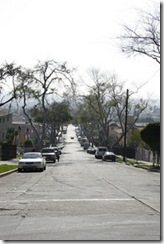
MORE THAN 100 YEARS AGO, Drew Street was a beautiful green spot named by pioneer Andrew Glassell after his son, Drew. For most of the 20th century, it was a tucked-away suburban enclave flanked by the Los Angeles River and Glendale's Forest Lawn cemetery. Then, starting in the 1960s, the city built apartments on its dead-end streets and avenues — and a bad element moved in, seeing the isolated little neighborhood as the perfect lair.

Drew Street, with its long, straight rise, offered the perfect viewing base from which to espy approaching cop cars. It turned out to be just the thing for Maria "Chata" Leon, a young toughie from a rough, lawless Mexican village who settled there and gave birth to 13 children — a half-dozen of whom became criminals. With a new baby on her hip every year or two, Leon dealt drugs and staked her claim on Drew Street, in a Bleak House stocked with guns and explosives.

She regularly did stints in jail and prison, and her growing brood, the extended Leon crime family, which has close ties to the Avenues gang that controls the area, slowly turned Drew Street into a hellish microcommunity that L.A. cops, politicians and code enforcers could not turn around. But hope materialized last year, when the city announced it was shutting down the Leon home and banning most of the Leon brood from their longtime family compound.

Leon was already gone, moved to Victorville, and many of her violent and drug-dealing sons were in prison. Some Glassell Park neighbors, who tell stories of around-the-clock drug deals and rampant gang activity at the house — including a murder in Leon's front yard — began to hope the nightmare might be over.

Then, last month, Drew Street erupted in AK-47 gunfire, forcing cops to evacuate two Los Angeles public schools and an entire neighborhood. And the son that some law enforcement officials described as the worst of Leon's boys, Danny "Klever" Leon, lay dead.

The mayhem erupted at about 11:30 a.m. on February 21, when three Avenues gangsters allegedly pulled up in two cars and opened fire on 36-year-old Marcos Salas and his 2-year-old granddaughter near Aragon Avenue Elementary School in Cypress Park. Riddled with 15 bullets, Salas, who had former gang ties, was killed instantly, but the tiny toddler survived. The shooting was over "taxes" the Mexican Mafia collects on local drug sales, and possibly in revenge for the 2007 death of Danny Leon's half-brother Randy Martinez.

smf adds: To report "Salas, who had former gang ties..." stretches the English language and the facts. The past tense is only appropriate because Salas - like Monty Python's dead parrot is no more - rubbed out on the sidewalk in front of an elementary school. Salas was a gangster, a member if not a leader of the Cypress Park Gang. Grandfatherhood does not make you a good person, according to law enforcement sources Salas had over ten arrests and convictions over the years for the type of criminal activity associated with street gangs.

The gangsters then exchanged gunfire with occupants of a black van — police speculate that the vehicle was probably full of Cypress Park gangsters — before heading back to Drew Street, where a series of gang-controlled homes and apartments are situated, almost mockingly, a couple of hundred yards across the the train tracks from the LAPD's Northeast Station.

There, police say, the suspected shooters were confronted by gang officers and opened fire — among them, Danny Leon, who was brandishing an AK-47 rifle, and his cousin, Jose Gomez, allegedly armed with a handgun.

When the shootout ended, Danny lay dead, the AK-47 by his side, and Gomez was wounded. Six hours later, a bevy of circling TV helicopters filming every movement, an LAPD canine team arrested a third suspect, Guillermo Ocampo, but a fourth man, the driver of one of the cars — later identified as Rafael "Stomper" Carrillo — had vanished. Local residents nervously awaited word from police of his whereabouts, fearing he might show up near their homes.

"Most people don't gun people down with an AK-47," says a law-enforcement officer who declined to be named, trying to describe just how frightening Danny Leon was, his dark behavior ingrained by "a background where mom is a drug dealer, his stepfathers are drug dealers. You are used to having people in your family killed. You hurt your closest friends. That is his life story."

Even on L.A.'s meanest streets, says this veteran officer, "I don't think someone exactly like him comes around all that often."

But while neighbors quietly cheer the death of Danny Leon, the fight for safe streets in Glassell Park is far from over. Eight days after the shootout, a gangster funeral party was held for slain grandfather Marcos Salas — just a block from where he was felled by Leon and others. Police confronted a partygoer, alleged Cypress Park gangster Carlos Arevalo, and during a foot chase shot and killed him, recovering a 44-caliber pistol.

Nor is the fight for Drew Street over. Because while the city wasn't looking, neighbors and police say, the clever Leons quietly tried to stake yet another claim, surprising neighbors and cops by coming up with enough money — $85,000 — to pay off a lien brought against the house when the city boarded it up.

At a splashy press conference in early 2007, City Attorney Rocky Delgadillo and City Hall politicians and police brass acted as though they had finally outsmarted the Leons.

The city does in fact still hold a few cards: A court injunction, in place until 2010, requires the owners of the property to sell it only to non-gang members. In addition, many of the Leons, including 44-year-old Maria, are banned from even approaching their old headquarters. And city-code inspectors have found the home uninhabitable and ordered it brought up to code before anyone can move in. Moreover, the city's Building and Safety department has scheduled an April 8 hearing to discuss its request that the house be demolished.

But with word sweeping through the embattled neighborhood that the $85,000 penalty has been paid, many fear the house will soon be open for business. "Did you hear?" says another officer who refused to be named. "Three years of investigation. What a waste."

THE COMMUNITY POLICE ADVISORY BOARD for the city's northeast area meets in a classroomlike setting at the Los Angeles Police Department's Northeast Station — a safe meeting locale for jumpy residents. Thirty minutes into the meeting and five days after the shootout, Captain Jose Perez tells the roughly 40 or so neighbors that Rafael "Stomper" Carrillo — who allegedly drove one of the two getaway cars after February's shooting rampage — has just been nabbed by police in the San Fernando Valley.

Unabashed cheering breaks out among the working-class residents, from a mix of white and Latino households with a sprinkling of blacks.

Carrillo — an alleged drug dealer on Drew Street — vanished after he and a carload of Avenues gang members allegedly exchanged gunfire with LAPD gang officers in the shootout that ended the life of Danny Leon, shutting down blocks of residential streets and a grade school while cops tracked the shooters. Local residents have been sweating it out ever since.

Despite the open cheering of the police on this night, the Leon family legacy has created plenty of blow-back for the cops — blow-back that one day could migrate up the food chain to Los Angeles City Hall, Mayor Antonio Villaraigosa and City Attorney Rocky Delgadillo.

Residents want to know: Why can't they clean out overt crime from this tiny spot of real estate?

Some neighbors loudly criticized the way the police department handled the lockdown and evacuations following the shootout. Parents were furious that their kids were locked down for eight hours in nearby schools. Some neighbors were angry that they were roused from their homes and not allowed to return for hours.

"It was a huge mess," says one officer matter-of-factly about resident complaints. "Where are you going to put us up tonight? Who is going to pay for our McDonald's? After eight hours of getting that, it got old. People were understandably upset. We are not perfect."

The LAPD officer who didn't want to be identified tells the Weekly that one resident quickly accused police of planting the huge AK-47 on Leon — not exactly the weapon of choice for hidden "throw down" weapons that corrupt cops toss into crime scenes. "Did we plant the facemask too?" the bewildered cop says, shaking his head in frustration. The Leon family will "probably file a lawsuit," he adds bitterly.

On the blog Topix.com, "anonymous" writes: "wats up with the cops shooting someone in the head. well i live there and thats wat happened and they still haven't picked up his body. theres no respect from the cops or from the gang. wheres the love."

On MySpace.com, one profile depicts a menacing skull with demon eyes that calls for death to the LAPD — citing the police code for murder, "187," against the "Pigz."

TELL-TALE TENNIS SHOES HANG from power lines above Drew Street, letting customers know that drug dealers are present and open for business. Tall, wrought-iron fences surround the mostly stucco single-family homes and dense apartment buildings, but they don't keep the bad elements out — or in.

The area is isolated by the Glendale Freeway to the southeast, and by Forest Lawn cemetery to the north and west. A hillside runs perpendicular to Drew Street, upon which multistory apartments with signs desolately touting "luxury townhouses" provide local criminals with excellent high ground — lookouts from which they can easily spot incoming police cars. Two apartment buildings on Drew Street are known as "Twin Towers" — named after the two multistory buildings at the Los Angeles County Jail — because they harbor so many convicted felons and convicted and suspected drug dealers.

Drew Street is a testament to city planning gone bad, home to more than 8,000 residents who mostly live in more than 1,500 apartment units the city allowed developers to cram into the area during the 1970s, wiping out a quiet single-family enclave. The residents are a mix of illegal immigrants and second-generation Mexican immigrants, elderly Filipinos and a few white and black families. Housing is definitely "affordable": a one-bedroom costs about $750 per month; a two bedroom, $950.

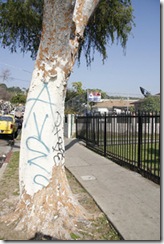
It's a dumping ground for stolen vehicles, a well-known drug bazaar — and a tough place to try to be a good citizen. Graffiti covers the sidewalks, the curbs, the streets, the apartment buildings — even the neglected trees. "I had to paint the back of my building four times in the last year-and-a-half," says apartment owner Eduardo Garcia — a rare resident willing to give his name. "I had to paint the front twice ... I can't have managers do it because [local thugs] will threaten him and tell him they will kill him."

Twice, when the Los Angeles City Council tried to install surveillance cameras on Drew Street, they quickly were shot out and stolen — both times — so the city gave up. Yet normal, law-abiding families are trying to make a stand here. On nearby Weldon Street, you can see nice houses with Nissan Pathfinders or better parked in their driveways. These families create a thin layer of civil society in an area run by the Avenues gang, which takes its name from the numbered corridors that slice across Figueroa Street several miles away in Highland Park's bustling yet economically poor shopping district.

The Avenues operates in cliques, each of which claims a gang territory based on where the members live. Gang experts say that in recent years, longtime Avenues gangsters have begun to allow tough, illegal Mexican immigrants to join their ranks, with Drew Street drawing immigrants from a rough village in Mexico's Guerrero State — an area that has a reputation for extreme lawlessness. This new mix spells disaster, says one law-enforcement official, because, "Here is one group of people who already had a tremendously lawless culture, on top of another, existing violent gang. And the synergy of the two produced what we saw the other day."

It wasn't always this way. Developer Andrew Glassell bought a large chunk of property in northeast Los Angeles in the 1880s, building his ranch house on land that is now home to troubled Washington Irving Middle School. In the early 1900s, Glassell sold part of his property to Forest Lawn cemetery and to developers of single-family homes.

After World War II, newly arrived European, Russian and Hispanic immigrants moved into what was then a nice, quiet spot to live. But in later decades, the city allowed developers to buy up the properties and turn them into 12-to-20-unit apartment complexes. Downtown planners never dreamed what was to come.

"There was a large influx of immigrants coming into the area in the '70s," says Bradley, who owns land in the area and goes by a single name. Immigrants weren't always welcome on the hilltops of Mount Washington and nearby areas, but Drew Street was more welcoming. Unfortunately, the laid-back neighborhood had, by the 1980s, attracted drug dealers and the Mexican mafia.

MARIA LEON MOVED FROM GUERRERO State ?to Drew Street around 1985. The once-petite 5-foot-2-inch toughie immediately got into a brush with cops, arrested in October of 1985 for assault with a deadly weapon. As her arrests piled up, so did her births — 13 kids by four or five men. Her sons — including Jose Leon, Danny Leon, Nicolas Real, Randy Martinez, Francisco Real and Jesus Martinez — all grew up on Drew Street, and most attended Fletcher Drive Elementary and Washington Irving Middle schools.

A law-enforcement official tells the Weekly that Leon's arrests included theft in 1986; burglary in Riverside County in 1986; selling PCP and marijuana in 1992; and extortion and drug dealing in 1994.

She was finally convicted of drug felonies, in 1995 and again in 1997, and by 1998 she was one of the first Avenues gangsters supervised by the probation department under the CLEAR gang task force, which was inspired by the horrific September 1995 murder of 3-year-old Stephanie Kuhen after her parents made a wrong turn in their car and ended up in no-man's land — an alley near Division Street in Glassell Park. That same year, Leon was convicted of petty theft.

Her longest stint in prison came after a Halloween bust in 2002, when the Glendale Police Department used a search warrant to enter the longtime Leon home on Drew Street. She was arrested for narcotics sales and child endangerment after officers found automatic weapons and explosives throughout the home — where she was also raising young children.

In 2003, while she was in prison, a local man was shot to death in her front yard — an apparent drug deal gone bad. Inside the house, the cops discovered a shrine to the patron saint of narco trafficking, Jesus Malverde, a folklore hero in crime-ridden Sinaloa. Danny Leon and his half-brother, Francisco Real, were convicted of accessory to murder in the killing.

Then Maria Leon was released from state prison in 2006. One resident says the Leons and the Avenues gang are constantly outsmarting the justice system. "It is so weird — they go to jail and after a day they're out," says a resident who grew up with the Leon boys. "How can it be so soon? How can they get out of jail so fast? People who work and have a good life — they get deported."

Apartment owner Garcia echoes the sentiment, saying, "They can't own the whole neighborhood like that. It shouldn't be happening in this day and age."

Garcia has largely given up on city police and City Hall, saying a federal task force "is what is needed. Basically, it's a war zone there to a certain extent — the intelligence and the lookouts on the corners. There are federal crimes taking place in the area."

JUST OVER A YEAR AGO, police closed off a block of Drew Street with yellow crime tape, and black-and-white cruisers stood guard at the street's entrance. Locals peered out of windows from buildings scrawled with gang graffiti: Aves, Sicko, Hefty and Chuko. Avenues gang members stood in groups nearby, almost amused as City Attorney Rocky Delgadillo announced that his office had boarded up the Leon family home.

It is "one step in our effort to eradicate gangs in the neighborhood," said Delgadillo.

Inside the house, his office encountered a veritable fortress. Gadgetry that looked like it came out of a James Bond movie included surveillance cameras, steel window bars and a laser tripwire system.

The Leon property was one of the first to be targeted by the city attorney's nuisance-abatement program Project Tough, part of Delgadillo's plan to drive gangs out of neighborhoods. It sounded like a good idea in 2005, when a Superior Court judge issued a preliminary injunction that mandated the eviction of Leon's son Nicolas Real, whom Delgadillo alleged acted as a front for the family, selling drugs from the house. Incredibly, the judge named another 54 people, either arrested at the house or identified as nuisances, who are also prevented from going near it. That long list includes Maria and Danny Leon.

In September 2006, the Leons were ordered to pay $75,000 in costs and penalties — and to sell the Drew Street property within four months. A real estate flier quickly issued by the family that read "Just Listed" sought $565,000 for two bedrooms, one bath and a garage. The flier touted the property as "a great family home" with marble in the bath. In another twist, the actual owners of the home have turned out to be a man in Arizona and another person in Los Angeles — not Leon — and Delgadillo's office suspects the two are straw men for the Leon family. One of the owners told city officials to go through Leon's son with any questions regarding the house. And one of the two owners initially denied owning the house.

So, at a press conference in early 2007, Delgadillo, flanked by Police Chief William Bratton and City Councilman Eric Garcetti, told an army of reporters that the penalties had not been paid, and the property had not been sold.

As a result, the city barricaded the home and fenced up the land, filing a lien for the costs plus a penalty. The lien would be used to initiate foreclosure proceedings, and city officials said the proceedings could be stopped if the owners sold the property to someone not affiliated with gangs.

"Every neighborhood has the right to live free from fear," said Garcetti at a podium in front of the house. "Those who traffic in drugs, death and fear, it is the city's promise that your time here is up."

Because the city attorney's "closure order" was recently lifted by the courts, the house can now be sold — but it cannot be inhabited until its extensive code violations are fixed. This new development has sent fear through the area, with neighbor Bradley telling the Weekly, "The Leon family is back. At the last hour, they came up with $85,000 [the original $75,000 plus interest] to get the house back. The city attorney thought by levying punitive damages on the family, they couldn't come up with the funds."

Rocky Delgadillo's office confirms that the $85,000 fine was paid, but states that the Leon family and the house's official owners are still bound by the rules of the permanent injunction. As for Leon, she now lives in the high desert, with several of her huge brood dead or in jail. And Eduardo Garcia wonders why nothing ever changes on Drew Street. "They can put a lid on militias, white supremacists, Columbian mafia and the Italian mafia," he says. "So why can't they take care of this little problem?"

Monday, March 03, 2008

Breakfast 'keeps teenagers lean'


BBC NEWS

Body-conscious teenagers may believe cutting out breakfast will help them lose weight, but the opposite appears to be the case, US research suggests.

In a five year study of more than 2,000 youngsters, those who skipped breakfast were found to weigh about 5lbs (2.3kg) more than those who ate first thing.

This was despite the fact that the breakfast-eaters consumed more calories in the course of the day.

But the study in Pediatrics found they were likely to be much more active.

The University of Minnesota research adds weight to a growing body of evidence that those who eat breakfast - whether young or old - are leaner than those who do not.

"It may seem counter-intuitive," said Mark Pereira, who led the research. "But while they ate more calories, they did more to burn those off, and that may be because those who ate breakfast did not feel so lethargic.

"While it's best to gimageo for a healthy option - a wholegrain cereal for instance - the evidence does seem to suggest that eating anything is better than eating nothing at all."


Mixed messages

Around 25% of the group studied regularly missed breakfast, and the problem was particularly pronounced among young women.

"The real problem is the profusion of messages about obesity - we need to make clear that eating regular meals is vital - and that a proper breakfast is very important. "

Tam Fry

National Obesity Forum


"It's not just a girl problem, but it is certainly more of an issue among this group," said Mr Pereira.

"They skip breakfast because they worry about weight gain - and it's ironic that the ones who aren't worried and eat in the mornings are the ones who keep their weight down."

Tam Fry, chairman of the Child Growth Foundation at the National Obesity Forum, said the findings of the study showed just how important it was to relay a clear and consistent message to young people.

"The real problem is the profusion of messages about obesity. We need to make clear that eating regular meals is vital - and that a proper breakfast is very important.

"If you eat well first thing, you'll feel brighter, you'll have more get up and go - and that will mean you'll expend more energy."

Teenagers are not the only ones who may benefit from sitting down to a proper breakfast.

In a study of nearly 7,000 middle-aged people in Norfolk, a team from Cambridge University found that those who ate the most in the morning put on the least amount of weight.

Pediatrics Logo
Official Journal of the American Academy of Pediatrics


THE STUDY: Breakfast Eating and Weight Change in a 5-Year Prospective Analysis of Adolescents: Project EAT (Eating Among Teens)
Maureen T. Timlin, Mark A. Pereira, Mary Story, and Dianne Neumark-Sztainer
Pediatrics 2008; 121: e638-e645.

[Abstract] [Full text] [PDF]


BBC NEWS | Health | Breakfast 'keeps teenagers lean'

March 4th: BUDGET EDUCATION CAMPAIGN LAUNCH

4LAKids, LAUSD + THE EDUCATION COALITION - a coalition of statewide education associations including The California State PTA, the Association of California School Administrators (ACSA), the California Association of School Business Officers (CASBO), the California County Superintendent Educational Services Association (CCSESA), California Federation of Teachers (CFT), the California School Boards Association (CSBA), the California School Employees Assocation (CSEA), the California Teachers Association (CTA), and Service Employees International Union (SEIU) - join with education partners throughout Los Angeles County for the:


BUDGET EDUCATIONCampaign Launch


Tuesday, March 4, 2008
12:15PM


Gratts Elementary School
Multipurpose Room

309 Lucas Avenue
Los Angeles, CA 90017

Media & Guest Parking: 4th St. & Hartford Ave


View Larger Map

PUBLIC SCHOOLS: an investment we can't afford to cut


Science bowl winners!

from The Homeroom - Los Angeles Times

And the winner is ...

North Hollywood High took first place in the 2008 L.A. Department of Water and Power Science Bowl regional competition. It was the school's 10th regional title for knowledge in science, math and technology.

Scibowl08That means the team goes to the National Science Bowl in May in Washington, D.C.

Each of the five team members -- Angela She, Emily Ye, Brian Kim, Ryan Thorngren and Murtaza Saifee -- receives a medallion and a $1,000 scholarship from Hitachi Corp. Their coach is Altair Maine.


Harvard-Westlake came in second, LAUSD’s Van Nuys High School was third, and Bravo Medical Magnet High came in fourth. Fifty-four teams from 30 schools in Los Angeles County participated this year.

The L.A. DWP Science Bowl is an official, regional qualifying tournament of the U.S. Department of Energy's National Science Bowl. The Department of Energy started the competition in 1991, and more than 100,000 students have participated.

-- Mary MacVean

The Homeroom: Los Angeles Times

SCHOOLS OPERATE IN CRISIS MODE: Districts across the state are laying off workers as they await $4.8-billion reduction proposed by governor.


In Rialto, 305 staffers will be cut.

by Jason Song | Los Angeles Times Staff Writer

March 3, 2008 - Rialto Unified teacher Joscelin Thomas knew that her school district was the first in the state to send employees notices that their jobs were in danger. She knew she was particularly vulnerable as a new employee. She hoped she wouldn't get one.

"I have a lot of faith. Maybe it won't happen," she said with a smile.
Then the vice principal asked her if she had received any certified mail recently.
Yes, Thomas said, but the mother of six hadn't had time to go the post office to pick it up.

"Um, that's it," the vice principal said gently as Thomas slumped in her chair.
Thomas' situation is an apt example of the predicament of public school teachers around the state. After crossing their fingers that they could avoid layoffs, teachers from Santa Ana to Kern County learned last week that they may not have jobs as their districts struggle to balance their books in anticipation of a $4.8-billion education cutback proposed by Gov. Arnold Schwarzenegger.

The California Teachers Assn. estimates that 5,000 notices of possible layoffs have been issued statewide and predicts more by March 15, the date by which districts must first notify teachers that their jobs are in danger. Final notifications should arrive by early summer.

The situation is particularly difficult in Rialto, where the school board voted to send notices to 305 employees. Officials project a nearly $23-million shortfall next year in the district's $220-million budget because of the governor's proposed spending plan and declining enrollment, which has been exacerbated by the sub-prime mortgage crisis. The district is already one of the 40 smallest in California.

Rialto, which has a largely Latino student body, had nearly 31,000 students two years ago but lost about 1,200 -- mostly because families moved amid high housing costs, Supt. Edna E. Davis-Harring said. Rialto officials were so concerned about the drop that they began mapping foreclosures and discovered more than 400 in their area.

"If you don't have the funding, you just don't have it. And we truly don't have it," Davis-Harring said.

Second-year teacher Jorge Alvarez tried not to let his concern show during a recent world history class at Wilmer Amina Carter High School. It's hard enough to control 24 sophomores at 7:30 a.m. without worrying about losing your house.

"I know this is first period, but wake up. We're in school now," he told his students, a few of whom were stifling yawns.

After breaking the class into groups, Alvarez handed out an assignment and promised 50 extra credit points to the first group to finish correctly, which set off a quick burst of activity.

Alvarez walked through the class fielding questions. When asked if Joseph Stalin killed himself, Alvarez quickly said no. He paused before offering a few words of encouragement. "I like your thinking. That was a tough question, even for me," he said.

Alvarez never thought he would end up back in high school after he graduated Rialto High School in 2001. He wanted to be an architect, but while attending Cal State San Bernardino, he began tutoring for extra cash and discovered that he loved the job. "I was teaching my friends' little brothers and sisters. I really liked giving back to my community," he said.

He started teaching full time for the district last year and bought a house for nearly $400,000 in August because he thought his job was secure. "I heard you can never go wrong with real estate," he said.

Not only is Alvarez now checking his mailbox every day, looking for certified mail, but he also is concerned that he won't be able to find another teaching job if he is laid off.
"I really like it, but every district's going through the same thing, so it's not like a lot of places will be hiring," he said.

In one classroom down the hall, 15-year veteran Susie Whitesell said that she wasn't afraid of losing her job but that "the teachers lounge isn't a good place to visit now. A lot of people are scared," she said.

As the clock ticked down in Alvarez's class, the groups raced to finish the assignment. One student asked another what the Italians did during World War II.

"They got beat up by everyone, just like you on the football field. C'mon man, hurry," said Manuel Madriz in an impassioned though dubious assessment. Despite Manuel's encouragement, his group handed in their work a few seconds behind another. "I needed those points," one muttered.

Alvarez looked over both answers. Like a man who was trying to stockpile his good karma, he gave both teams the extra credit. "Your group had to walk a little further," he told Manuel. "So you tied."

Even students know there's something amiss, Alyssa Silva said. The Carter High junior is one of 26 students in her pre-calculus class and is concerned that if teachers get laid off, class size will grow and students won't get the same quality of education. The 305 employees who received potential layoff notices are about one-fourth of the district's total staff.

"I've been in classes that have a lot of kids, and it's hard to understand anything," she said.

Rialto Unified has made some recent academic gains, and its superintendent worries that deep cuts could stall progress. The district scored a 661 on California's latest Academic Performance Index, below the state's target of 800; the API measures schools and districts on student scores in math, English and other subjects.

Thomas is in an even more vulnerable situation than Alvarez because this is her first year of teaching. The 36-year-old was a stay-at-home mother for much of her life but comes from a family of teachers and had always wanted to stand in front of a classroom. When she finished her undergraduate degree last year, she applied to 10 districts before she was hired by Rialto High.

If she does lose her job at Rialto, Thomas said, she could stay home with her children, ages 4 to 17. "Maybe that's what I'm supposed to do in this situation," she said.

But she admits that now that she's back to teaching, she'd like to continue. "I heard the Department of Corrections is always hiring teachers," she said.

Meager science education threatens California's future


by Abby Sobrato and Anita Parsons - San Jose Mercury News

3/2/08 - Last month, Gov. Arnold Schwarzenegger gave his State of the State address to Californians. He said, "California, if a nation, would be the sixth largest economy in the world - California is home to three of the top six universities in the world. California has more Nobel laureates, more scientists, more engineers, more researchers, more high-tech companies than any other state."

Therefore, it seems that within our great state, and through our schools, we should be educating and producing these talented scholars.

Unfortunately, that is not reality. Based on a recent study conducted by researchers at the University of California-Berkeley, 80 percent of California's elementary classrooms spend an astoundingly short amount of time - less than an hour a week - learning science. Even worse, 16 percent spend no time on it at all. These statistics do not speak highly for science-based education in California.

So, where are all these scientists, engineers and researchers coming from? According to a 2006 study by the Center for Studies in Higher Education, "leading high-tech states (California) rely heavily on their university sectors and a highly educated workforce, yet they are increasingly importing talent while neglecting investment in the education and skills of their native population."

How will California's youth compete for acceptance in our top universities? How will our children learn about the natural world around them? How will they learn about sustainable living for their future? If students are not being taught in our schools' classrooms, where will the knowledge come from?

If we truly understand the importance of science education, then we must also accept the responsibility to ensure that every child in California receives a comprehensive science-based education. There are a few programs that are thriving, such as the Santa Clara County Office of Education's Walden West Outdoor School, which provides a comprehensive residential science camp located next to the 3,500-acre Sanborn County Park.

At Walden West every year, more than 8,000 students discover varied ecosystems, practice environmental consciousness and develop an understanding and commitment to the natural world. Instead of being inside the concrete walls of a traditional school building, the children move outdoors to learn the history of giant redwoods, the diversity of wildlife and our connection to the indigenous tribes who used to live here. The Youth Science Institute, Camp Campbell and Web of Life Field School also provide unique outdoor science opportunities. Programs like these can foster the learning process - but we need to do more. We need to hold our legislative leadership, our teachers and ourselves accountable to ensure that our children will be California's next generation of scientists, engineers and researchers.

With the very real threat of budget cuts to core educational programs, our traditional ways to raise money, like fundraising clubs and the PTA, will be severely challenged. Budget shortfalls will create a domino effect for science programs, which typically get the majority of funding from school-affiliated fundraising groups. It may be that science-related courses will be viewed as non-essential, and therefore be further jeopardized.

Silicon Valley has a rich tradition of collaboration. We have to do the same as we approach our science education crisis. As simplistic as it sounds, it really is about being heard. We can all collectively write letters, send e-mails and make phone calls to our state representatives. We should also let state Superintendent of Public Instruction Jack O'Connell hear our concerns. If we cherish our reputation as the epicenter of the high-tech world, we need to place a far greater emphasis on the importance of science education in our own community.


ABBY SOBRATO is president of the Walden West Foundation. ANITA PARSONS is the director of Environmental Education at the Santa Clara County Office of Education.

Why Must the California Budget Deficit Be Closed on the Backs of Teachers and Students?


Robert-Cruickshank.gifBy Robert Cruickshank  -California Progress Report

March 2, 2008 - If every Californian paid an extra $150 a year in vehicle license fees, $6.1 billion would be raised eliminating the proposed budget cuts to health care, parks, and education. If we closed the tax loopholes that LAO Elizabeth Hill identified - as Arnold kinda sorta agreed we should - we would raise $2.5 billion, over half of the $4.4 billion cuts proposed in Arnold's budget.

Or we could fire thousands of teachers. From today's Orange County Register:

“More than 1,590 teachers could lose their jobs.

“Class sizes in hundreds of classrooms might increase from 20 to 30 students.

“And one district may shutter a campus altogether.

“The county's 28 school districts are deep in efforts to develop plans to cut about $204 million, or 5 percent, from their operating budgets in the face of a mounting state budget crisis.

"They're preparing for the worst because school districts, which receive about 70 percent of their funding from the state, often have to approve staffing and much of their spending for the next school year long before Sacramento lawmakers finish wrangling over the state budget.

"These could be the most devastating cuts our schools have ever seen," county Superintendent William Habermehl said. "I don't know how some of our school districts will be able to survive this and provide the same quality of education."

This being the OC Register we should not be surprised that the piece claims "locked-in teacher pay raises, restricted state and federal funds and other fixed expenditures" are a big part of the problem, but let's look at the bigger picture here.

Restoring the VLF would cost an average of $150 per person per year. But the proposed teacher firings would cost nearly 40,000 Californians around $50,000 a year in income, health care, and other important benefits. That's money that isn't going to pay mortgages or rents. Money that isn't keeping a small business afloat, or a big box store's sales high enough to prevent mass layoffs. As California slides into recession, and with zero job growth to show for 2007, how on earth does it make any sense to deliver such a crippling blow to the state's economy through firing all these teachers?

Surely it is more sensible to ask Californians to pay an extra $150 a year for the privilege of driving, and to keep the state's economy afloat and its schools in session, than to privilege a wasteful and reckless tax cut at the expense of the economy.

Of course, there is also the long-term damage to the state through these crippling education cuts. Larger class sizes and fewer classrooms mean fewer students will learn. Fewer students will attend college, fewer will get good jobs or create new businesses and technologies. The state will be set back even further - California will become Mississippi.

All so that people can save $150 a year on their car registration. All so that a handful of wealthy yacht owners can get a tax break. We are constantly told that tax cuts are necessary to keep the state in business - but as the looming collapse of public education should suggest, this is just not so. California's economy is still living off of the investments made in education in the 1960s and 1970s - but that is beginning to run out.

Even in Republican Orange County, in cities like San Juan Capistrano and Mission Viejo, voters want to ensure that their kids will get a decent education. Parents know full well that firing teachers means their children will not learn. Republicans are talking a hard line, claiming they're not going to compromise an inch on the budget.

But I think we should ask the parents in south Orange County whether they agree with their Republican representatives that their child's future is really worth $150 a year.

Robert Cruickshank is a historian, activist, and teacher living in Monterey. He is a contributing editor at Calitics.com and works for the Courage Campaign, in addition to teaching political science at Monterey Peninsula College. Currently he is completing his Ph.D. dissertation in US history, on progressive politics in San Francisco in the 1960s and 1970s. A native Californian, he was raised in Orange County and educated at UC Berkeley.

Sunday, March 02, 2008

FINDING THE BEEF - Recalled meat collected from schools

by Airan Scruby, Staff Writer - Whittier Daily News

Staff Photo by Raul Roa

03/02/2008 - PICO RIVERA - Much of the recalled beef sold to Los Angeles schools has been returned to a district warehouse in Pico Rivera, after the schools pulled all beef from their menus and issued notices to parents.

Nearby districts in the area were also affected by the recall.

Schools statewide were ordered to stop serving food that could have been contaminated with beef produced by Westland/Hallmark Meat Co. of Chino and many were ordered to destroy the product. The beef had been sold and distributed through the National School Lunch Program.

"This is a Class Two recall, which means there was no verified sickness," said Rochelle Abramovitz, Los Angeles County chief environmental health specialist.

"It was just the way they treated the cows."

School districts began gathering and destroying ground beef and products containing it after a United States Department of Agriculture investigation uncovered violations of Food Safety and Inspection Service guidelines at the Chino meat packing company.

On Feb. 17, the company voluntarily recalled 143 million pounds of beef.

While the meat was not considered unsafe for consumption, the company had been accused of bringing "downer cows," those too sick or injured to stand, to slaughter.

School districts with less than 50 of the 40-pound cases of product were allowed to dispose of the meat themselves by burning, compacting or dissolving the materials in bleach. Those with

more were required to arrange for the waste to be deposited at the Puente Hills Landfill.

Shipments from schools, restaurants and markets to the landfill began Feb. 24, Sanitation Districts Division Engineer Pat Freemon said, and so far more than 120,000 pounds have been delivered.

Dennis Barrett, director of food services for Los Angeles Unified School District, said his district collected about 155,000 pounds of beef and packaged food items containing beef that was recalled.

"We've been going by and making sure we're bringing the beef back to one location," Barrett said. "We've got all the beef in as of yesterday, and we're going to do a double-check."

That location, the LAUSD Stores and Foods Warehouse, has been operating on Rex Road in Pico Rivera since 2003. The 400,000-square-foot building has a staff of about 175 and holds everything from frozen burritos to office supplies, to be shipped to schools in the district as needed.

According to Marc Monforte, deputy branch director of purchasing at the warehouse, staff is doing a final accounting and preparing to send materials to the Puente Hills Landfill.

"We're looking at approximately seven to 10 days in terms of actually going to the landfill," Monforte said. "We're just looking at logistics in terms of the disposal."

LAUSD spokeswoman Ellen Morgan said she could not give a cost to the district for the recall because totals had not yet been tallied.

LAUSD was not the only district to contend with recalled beef. Montebello Unified School District was also found to have beef affected by the recall, Nutrition Services Director Victoria Cheung said.

Cheung said her district has about 44,000 pounds of recalled ground beef, which was deposited in the Puente Hills Landfill on Thursday. The district lost $6,000 in processing and disposal costs, and about $150,000 in the actual cost of the meat.

"We don't know if they're going to or how they're going to reimburse or replace that beef," Cheung said.

Beef sent to El Rancho Unified School District and Norwalk/La Mirada School District also had been destroyed after officials heard about the recall.

Those districts had a relatively small amount of beef, and so both were allowed to dispose of the waste themselves.

Other area districts took precautions by holding all beef products until further notice. Some, like Whittier City School District, will not serve beef until the end of this month.

"It's just until all the commotion has died and we know that this product is a good product," said Food Service Director Cristina Obergon.


Saturday, March 01, 2008

The news that didn't fit from March 2nd!

Loosely cobbled together from mostly the UCLA/IDEA Just Schools California Weekly News Roundup, Click headlines below to access full stories.

STUDY FINDS DISPARITY IN CIVICS CLASSES

By Martha Irvine/San Francisco Chronicle

Her neighborhood, with its police cameras and abandoned buildings, isn't known for inspiring hope. Yet, 18-year-old Ariel Williams feels empowered. She's lobbied her state lawmakers to increase education funding. She and other students traveled to Iowa in December to campaign for presidential candidates. And now she can't wait to vote in November's election. They are the sort of results that happen when civics education is creative and engaging, according to a new study."

SCHOOL BUDGETS SQUEEZED

Battle begins to limit losses
By Laurel Rosenhall/Sacramento Bee

Laying off teachers, school bus drivers, librarians and counselors. Adding more kids to every classroom. Charging students fees to play sports. Getting rid of music. In e-mails and newsletters, during board meetings and rallies, school districts across California are telling parents that they have to do these things – and more – because of budget cuts proposed by Gov. Arnold Schwarzenegger. Today they'll say it again during a news conference at Valley High School, where leaders from Sacramento's biggest school districts will join the state superintendent to blast Schwarzenegger's proposal to slash $4 billion from next year's K-12 education budget.

NOT MUCH TO APPLAUD IN LATEST EDUCATION ANNOUNCEMENT

State students deserve more aggressive efforts at improvement.
Editorial/Fresno Bee

We suppose the latest education announcement by Gov. Arnold Schwarzenegger and state Schools Superintendent Jack O'Connell is better than completely ignoring the problems in California's public schools. But not much. Schwarzenegger and O'Connell on Wednesday unveiled a proposal to help schools avoid federal sanctions for not achieving academic improvement goals. The state should have taken action to help these 96 school districts long before they were considered the worst of the worst.

LAUSD'S COFFEECAKE A RECIPE FOR FAILURE …or Daily News uses typo in recipe to justify District break-up


Los Angeles Daily News, CA - Feb 29, 2008
IT'S starting to seem that the Los Angeles Unified School District cannot do even one thing right. Even the district's one shot at getting some positive attention - after months of justified public bashing over the payroll scandal that wasted millions ...

TEACHER-PAY MODEL NOT SEEN AS PROMISING AT SECONDARY LEVEL

By Bess Keller/Ed Week

A leading model for professionalizing teaching and changing the way teachers are paid shows mixed capacity for raising student test scores, concludes the first independent examination of the Teacher Advancement Program. While elementary schools in the program do better than comparison schools, TAP middle and high schools lag behind their non-TAP counterparts in test-score gains, the study says. The research, presented this week at a conference on teacher pay organized by the National Center on Performance Incentives, based at Vanderbilt University, looked at annual gains in mathematics test scores over four years for about 1,200 schools in two states.

CHEATING SCANDAL ROILS ELITE HARVARD WESTLAKE SCHOOL
Los Angeles Times, CA -
Feb 27, 2008
The tests were then shown to several other students before midterm exams last month, said Harvard-Westlake President Thomas Hudnut. ...

smf: What fun to wring one's hands and bemoan the downfall of the rich and privileged - but his story contains one of the great pieces of pseudo-scientific research jumped-to-conclusions of all time: "According to a national survey of high school students by the Los Angeles-based Josephson Institute of Ethics, young people display deeply entrenched habits of dishonesty."

Here's a little song we can all join in with ...from Bye Bye Birdie

'Why can't they be like we were,
- perfect in every way?
Oh whatsthematter with kids today?
- wackado, wackado, wackado'.

MISSING IN CAMPAIGN '08: THE EDUCATION CANDIDATE

Opinion by Wendy D. Puriefoy/USA Today
Wendy D. Puriefoy is CEO of the Public Education Network, a Washington-based association working to advance public school reform in low-income communities

Listen to the fevered rhetoric of the presidential candidates and you get the impression that the country is in a state of crisis. They have talked pointedly about the war in Iraq, the ailing economy and the need for health care reform. Taxes, immigration and the war on terror? All accounted for. Yet one issue that's key to our nation's security, prosperity and future has barely been discussed in the more than 30 hours of debates: education. Nearly 50 million of our nation's children attend public schools, yet the men and woman who aspire to lead us have spent less time debating how these children are being educated than it takes to get a haircut or facial.

L.A. SCHOOLS' HIRES ARE LOANERS

Two in mayor's program are being lent by another district.
By Howard Blume/
Los Angeles Times

The mayor's office acknowledged Thursday that two top hires it introduced this week are technically on loan from the San Diego Unified School District. One of the employees is Angela Bass, who was presented at a Monday news conference as the superintendent of instruction for the two academically struggling high schools and four middle schools that will fall under the stewardship of Mayor Antonio Villaraigosa. The mayor's team expects Bass and Staci Monreal to stay long-term in Los Angeles, said Marshall Tuck, executive director of Villaraigosa's Partnership for Los Angeles Schools. The loan arrangement allows both to continue earning credits in the California State Teachers' Retirement System.

DATA DEFICIT

Editorial/Riverside Press-Enterprise (Monday)

California's best strategy for reducing the number of students who drop out of high school: compile better data about pupil performance. Until the state has a system in place to track individual students' achievement, recommendations for stemming the flow of dropouts depend on educated guesses and approximations. So the governor and Legislature should not let a budget crisis delay a new data system that will track individual students' performance from year to year. The governor proposes to spend $10.9 million on the system next fiscal year, which is a worthwhile investment even given the state's budget deficit.

THE FIGHT OVER QEIA

Blog by John Fensterwald/San Jose Mercury News (Monday)

The Legislature never should have signed off on the $3 billion out-of-court settlement two years ago between Gov. Schwarzenegger and the California Teachers Assn. over education funding that the governor had promised but withheld. But legislators shouldn’t cut it now; they should reject the recommendations of Legislative Analyst Elizabeth Hill. In the budget alternative that she presented last week, Hill suggested suspending next year’s allocation of $450 million of the Quality Education Investment Act, the seven-year, $3 billion agreement to funnel more money to low-performing schools.

EDTRUST’S NEW DATA TOOL

Blog by John Fensterwald/San Jose Mercury News (Tuesday)

Thanks, EdTrust-West, for making it pain-free to find out how every school is doing — and other vital stats parents and teachers need to know. Raising the Roof is a terrific new data-mining tool that EdTrust-West introduced yesterday at the start of its conference in San Francisco on student achievement. It takes the state Department of Education’s kludgy data base, DataQuest, and makes it simple, even fun, to use. The state’s education data system is woefully weak; this year, by creating a state data commission and funding the next phase of a data bank, the Legislature may do something about it. Meanwhile, the Education Trust-West is making the most of what’s available.

SCHOOL SMARTS

Consolidating grants saves money and more
Editorial/San Diego Union-Tribune (Tuesday)

In a state Capitol full of grandstanders, lazybones and union puppets, Legislative Analyst Elizabeth Hill's pragmatism and professionalism stand out. This was once again on display with a key element of her proposal on how to tackle the state's massive budget crisis. Hill argues one simple reform could allow education spending to be frozen through the next fiscal year – wiping out at least $2.8 billion in projected funding increases – without any downside. That reform: consolidating 43 “categorical” K-12 spending programs mandated by state rules into four basic grant programs. We think this approach not only wouldn't have any downside; it would probably improve schools.

WORRY FOR SCHOOLCHILDEN WHO HAPPEN TO BE POOR

Editorial/Monterey County Herald (Wednesday)

Poor people and schools. Those four simple words are meant to nudge anyone who can help. There is a special need this year for Californians of all stripes to go to the defense of poor people and schools as the not-so-Golden State prepares for the messiest budget battle of recent memory. Many others will be hurt as well, but most are headed into this fight better protected than poor people and schools. Budget cutting usually starts with the poor, for reasons that include lack of an effective lobby. And while it might seem, based on the purported strength of the California Teachers Association, that the schools are well organized and able to fight for themselves, the results of many past budget cycles contradict that thinking.

IMPROVING VOCATIONAL EDUCATION

Blog by Mitchell Landsberg/Los Angeles Times (Wednesday)

An organization started last year by the James Irvine Foundation to promote career and technical education -- the newfangled term for what used to be called vocational ed -- issued a report today with policy recommendations for California schools. But the president of ConnectEd, Gary Hoachlander, says that of the 10 recommendations, only four are probably realistic this year, considering the severe funding cuts that Gov. Arnold Schwarzenegger is proposing for education. You can find all 10 recommendations here.

NYT: Education Cuts in California

The New York Times


March 1, 2008

Letter

To the Editor:

The California State University, with 23 campuses, is the largest and most diverse four-year higher education system in the United States. At least 53 percent of our students are ethnic minorities (more than twice the national average), and 40 percent come from households where English is not the primary language.

We C.S.U. faculty, students and administrators have been experiencing firsthand the reverse in economic mobility you reported this week (“Study Says Education Gap Could Further Limit Poor,” news article, Feb. 20).

C.S.U.’s budget was slashed by more than half a billion dollars in 2003 and 2004. Now, Gov. Arnold Schwarzenegger proposes a 10 percent across-the-board cut in state financing that would leave our state university $386 million deeper in the hole. These cuts would directly affect California’s economy and people.

Campuses have already made application dates earlier to stem enrollment. If the cuts are carried out, C.S.U. will be forced to turn away qualified students, eliminate class offerings and cut student services that help guide students to graduation.

Student fees, which have doubled since 2002, would be raised yet again. The most disturbing part of this is that we know that college provides a solid path into the middle class, thereby allowing our graduates to contribute more to society, to the economy and to states’ revenues.

In a state like California that depends on innovation to support its economy, cutting C.S.U. is shooting us all in our collective foot. We hope that in the coming weeks, the governor will change his mind about slashing the higher education budget and crushing the hopes of the people of California.

Lillian Taiz
Los Angeles, Feb. 21, 2008

The writer is president of the California Faculty Association and a professor of history at Cal State Los Angeles.

California Education Budget Update by Senator Perata

by Don Perata
President pro Tem
California State Senate - from California Progress Report

Perata-New-session.gif

Feb, 28, 2008 - Once again Gov. Arnold Schwarzenegger is talking about improving education without acknowledging that his budget cuts would devastate California’s classrooms and leave the state nearly last in the nation in educational support.

He balances his budget on the back of education taking $4 billion from a system that is already ranked 47th in the country in per-pupil spending.

Cutting $4 billion would mean:

• Laying off 57,000 teachers, or 20 percent of the state’s teaching workforce. Or,
• Eliminating four weeks of the school year. Or,

• Increasing class sizes by 23 percent, making them about one-quarter bigger.

Those are some of the awful choices we face, under the Governor’s budget plan.

But, rather than searching for solutions to his short-sighted, cuts-only approach, the Governor is holding press conferences on what federal funding might do for the state’s worst-performing schools.

It’s abominable that 97 California school districts failed to meet test score requirements set by the federal No Child Left Behind law. Unfortunately, the Governor’s budget cuts could very well send more school districts into the same territory.

The Governor touts education excellence on one hand while he undercuts it with the other.

It’s outrageous, and Californians shouldn’t stand for it.

Senate Democrats are committed to putting classrooms first. Schools must succeed if California wants a competent workforce and a strong economy. California cannot remain a land of opportunity and prosperity without a strong public school system.

We have tough decisions to make, as we contemplate how to cover an $8 billion deficit in next year’s budget. But whatever we do, let’s not sacrifice our future.