“A little patience, and we shall see the reign of witches pass over, their spells dissolve, and the people, recovering their true sight, restore their government to its true principles. It is true that in the meantime we are suffering deeply in spirit, and incurring the horrors of a war and long oppressions of enormous public debt… And if we feel their power just sufficiently to hoop us together, it will be the happiest situation in which we can exist. If the game runs sometimes against us at home we must have patience till luck turns, and then we shall have an opportunity of winning back the principles we have lost, for this is a game where principles are at stake.”
–Thomas Jefferson, letter to John Taylor, June 4, 1798 in The Writings of Thomas Jefferson p. 1050.
Thursday, February 21, 2013
THE KEEP CALM & CARRY ON CAMPAIGN 2013
The California Office to ®eform Education: LAUSD SUPERINTENDENT SEEKS NCLB WAIVER FOR HIS DISTRICT AND NINE OTHERS + smf’s 2¢
- LA Daily News http://bit.ly/WcHCjf
02/20/2013 03:03:26 PM PST - LOS ANGELES -- With California unable to get a waiver from the No Child Left Behind law, LAUSD and nine other districts have launched an effort to create their own data-based accountability systems -- and have more freedom in how to spend tens of millions in federal dollars.
No Child requires that students pass English and math tests by 2014-15 -- a standard that many of the state's education leaders believe is unrealistic.
LAUSD Superintendent John Deasy met Wednesday with Education Secretary Arne Duncan to discuss granting waivers to a consortium of 10 districts that together serve more than 1 million students. Long Beach Unified is also part of the consortium, which calls itself the California Office to Reform Education.
<<LAUSD Superintendent John Deasy is seeking to leverage the district's move toward teacher-accountability standards into more freedom on how to spend tens of millions in federal dollars. (File photo by John McCoy/Staff Photographer [photo modified]
"We had a fantastic meeting," Deasy said in a phone interview from Washington, D.C. "Secretary Duncan said he welcomes the opportunity to work with us, which I see as a positive sign."
Deasy said waivers would lift restrictions on how they can spend federal Title I -- some $83 million for LAUSD. Currently, the money is earmarked for tutoring and remedial programs, but only a small fraction of eligible students take advantage of the help.
California's waiver request was denied in December after state leaders refused to tie teacher evaluations to student test scores.
Los Angeles Unified has just launched a new performance-based evaluation, and the other consortium members would have to create similar systems in order to qualify for a waiver.
smf: On the face of it, 4LAKids supports the audacity ofthis effort:
- Just because Deasy’s for it doesn’t mean it’s a bad idea!
- …and NCLB’s application of Title One funding is an unmitigated disaster.
- Of course, it’s the easiest thing in the world to make the worst of a bad situation!
What is amusing here is that Deasy & Co, seems have to created a special interest lobbying group masquerading as a quasi-governmental agency (The California Office to Reform Education*) to keep applying for federal waivers based on Deasy’s interpretation of a collective bargaining agreement his collective bargaining partner disagrees with!
Apparently Einstein didn’t say it, but “Insanity is doing the same thing over and over again and expecting different results.”
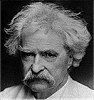
Mark Twain did say that “History doesn’t repeat itself. But it does rhyme.
___
_______
*aka CORE – which been historically unsuccessful at:
- applying for Race to the Top funds and
- teachers union support therefore and
- for waivers from Secretary Duncan to requirements for teacher’s union support thereof.
Not to be confused with the Congress of Racial Equality – but probably easily confused with Common Core State Standards (and testing) – to which their wagon is hitched.
The best Bd of Ed $ can buy?: FORMER DC SCHOOLS CHANCELLOR MICHELLE RHEE JOINS LIST OF DONORS TO LAUSD SCHOOL BOARD RACE
Mary Plummer | Pass / Fail : | 89.3 KPCC http://bit.ly/YdxN6q

AP Photo - D.C. Chancellor Michelle Rhee, shown here in 2008, donated $250,000 to a PAC supporting charter-friendly L.A. school board candidates.
February 20th, 2013, 6:23pm :: Add former Washington, D.C. schools chancellor Michelle Rhee to the list of out of towners weighing in on the LAUSD school board race--financially speaking.
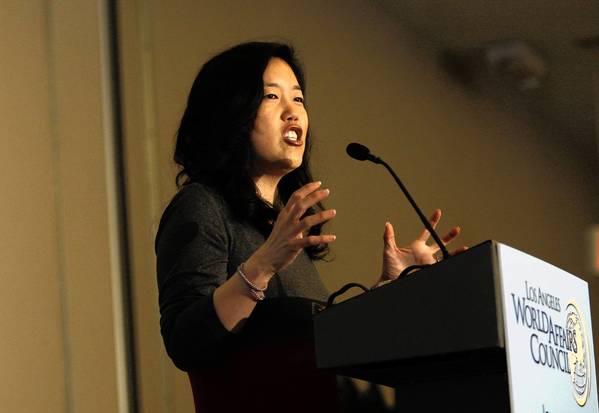
Rhee was in town for a panel discussion at the University of Southern California, where she announced a $250,000 donation to a PAC supporting charter-friendly candidates, the Coalition for School Reform. She disclosed the donation after the event in response to a reporter's question about Rhee's picks for L.A. school board.
The university's Jesse M. Unruh Institute of Politics put on the event, which aimed to address the "future of California’s K-12 educational system." About 120 people attended, according to USC officials.
Catherine Shieh studies politics at USC and sat on the panel. She said the conversation touched on big issues in California like teacher evaluations and school spending.
"She fascinates so many people on such a large spectrum," Shieh said, adding that Rhee helped to make California's education challenges feel more manageable to the audience. "Her presence is very inspiring to a lot of people. She keeps marching up to the forefront ... She looks for new opportunities to find solutions."
Rhee is the Founder and CEO of Students First, an education reform advocacy group based in Sacramento.
She's also promoting her new book, “Radical: Fighting to put students first,” which was released earlier this month. A review in the Washinton Post said the book offers some interesting coming of age details but has "holes in the account of her centerpiece accomplishment: the groundbreaking 2010 labor contract."
Rhee was the recent subject of a Frontline documentary that examined how her district handled allegations of test tampering at schools. Filmmaker John Merrow talked to KPCC's Alex Cohen last month.
MICHELLE ®HEE INC. DONATES $250,000 to ®EFORM INC. CANDIDATES IN LAUSD RACES
A quarter-of-a-million dollars from StudentsFirst, led by the former District of Columbia schools chancellor, will benefit races of board President Monica Garcia and two other candidates. |
By Howard Blume, Los Angeles Times | http://lat.ms/XASPMR

Michelle Rhee, former chancellor of District of Columbia schools, is head of StudentsFirst, an education reform group that pumped $250,000 into the Los Angeles Unified School District board races. (Allen J. Schaben / Los Angeles Times / January 31, 2013)
February 20, 2013, 7:34 p.m. :: A group led by former District of Columbia schools chancellor Michelle Rhee donated $250,000 Wednesday to contests for seats on the Los Angeles Board of Education, adding further political fuel to a battle over the direction of reform efforts in the nation's second-largest school system.
The support of StudentsFirst, which is based in Sacramento, will benefit an independent campaign on behalf of school board President Monica Garcia as well as Kate Anderson and Antonio Sanchez, who are seeking to join the seven-member body.
The L.A. teachers union is mounting an opposing campaign in two of the races.
Rhee has become both a controversial and influential figure in education-reform debates. Her group has lobbied lawmakers and donated to campaigns across the country; it works primarily at the state level to influence policy.
Rhee's donation follows a $1-million contribution to the same candidates made by New York City Mayor Michael R. Bloomberg last week. The independent campaign, with resources of more than $3 million for the March 5 election, is being managed by the Coalition for School Reform, which is closely allied with L.A. Mayor Antonio Villaraigosa.
Rhee's donation matches that of philanthropist Eli Broad and media executive A. Jerrold Perenchio. Another large recent contribution, $100,000, has come from philanthropist Casey Wasserman, who has funded positions on Supt. John Deasy's executive staff.
"This is just another example of outside 'reformers' trying to influence the outcome of the Los Angeles school board races," Warren Fletcher, president of United Teachers Los Angeles, said in a statement. Voters "do not need outsiders deciding who is best to sit on the LAUSD Board of Education."
Rhee said her involvement in Los Angeles could advance school reform statewide.
"We think it's important that John Deasy be able to continue on the job to finish the work he started," she said.
Deasy is developing an evaluation system that incorporates the use of student standardized test scores as one measure of an instructor's effectiveness. Last week, he directed principals to count test results as 30% of an evaluation. He also has altered district rules so that layoffs are not based strictly on seniority.
In District 4, Anderson, a parent and an attorney, is trying to unseat incumbent and former teacher Steve Zimmer.
Zimmer has frequently voted for Deasy's proposals, but the superintendent's closest backers have clearly thrown their support to Anderson. Deasy's critics are now lining up just as visibly behind Zimmer.
Through Wednesday, outside spending in District 4 had surpassed $1 million, divided evenly between money spent on behalf of Zimmer and Anderson. Anderson's own campaign fundraising has outpaced Zimmer's: $130,000 to $31,000.
Independent spending, including some from unions, on behalf of Sanchez in District 6, an open seat, has swamped the resources of opposing candidates Monica Ratliff and Maria Cano. Spending by and for Garcia has done likewise in District 2, although the teachers union hopes to force the incumbent into a runoff. Her challengers are Isabel Vazquez, Robert Skeels, Annamarie Montanez and Abelardo Diaz.
Wednesday, February 20, 2013
L.A. COMMUNITY COLLEGE CHANCELLOR RESIGNS UNDER FIRE
by Carla Rivera, LA Times | http://lat.ms/WQ9bB6
February 19, 2013 | 3:58 pm :: Daniel LaVista announced Tuesday that he will resign his post as chancellor of the Los Angeles Community College District, the nation’s largest, and with a poor record of student completion and budget problems, one of its most challenged.
LaVista made his announcement in a district-wide Chancellor's Update email extolling the progress made in toughening accountability and bringing better coordination to the nine-campus district but acknowledging the challenges that lie ahead.
“Even with a healthier FY14 budget proposed for the state’s community colleges, there are no quick fixes to increasing student success, offering a stimulating and accessible academic experience, addressing accreditation issues, providing a satisfying workplace, reinforcing shared governance and continuing responsible completion of the building program,” LaVista wrote. “The chancellor who leads this remarkable albeit challenging district must take the long view and make a long-term commitment, something I’m unable to do.”
LaVista was not available to comment. In the memo, he said he would pursue “other opportunities that combine my professional and family interests.” His resignation is effective June 30, giving the Board of Trustees time to recruit a new or interim chief, he said.
LaVista became chancellor in August 2010. He replaced interim Chancellor Tyree Wieder, who took over after the June 2009 departure of former Chancellor Marshall Drummond. A native of upstate New York, LaVista previously served as executive director of the State Council of Higher Education for Virginia and executive director of the Illinois Board of Higher Education, as well as president of two community colleges in Illinois.
The Los Angeles district serves about 240,000 students each year but, like other districts, has been hard hit by state funding cuts and slashed course offerings.
A 2011 Times investigation uncovered poor planning, questionable spending and other flaws in a $6-billion campus rebuilding project and last year two campuses were placed on academic probation.
[
FAA GREENLIGHTS $1 LEASE FOR LAUSD AVIATION SCHOOL AT VAN NUYS AIRPORT
By Dana Bartholomew, Staff Writer, LA Daily News | http://bit.ly/WWxnU1
2/14/2013 07:17:41 PM PST :: A plan to save a threatened aviation mechanics school at Van Nuys Airport inched toward takeoff this week after a tentative go-ahead from the FAA for a lease proposal.
In a letter to airport officials Wednesday, the Federal Aviation Administration said its policies would support a $1-a-year airport lease.
Los Angeles World Airports had asked the FAA for guidance in offering cut-rate rent to the Los Angeles Unified School District, whose mechanics school was imperiled by budget cuts and rising airport leases.
The current lease for its North Valley Occupational Center hangar expires at the end of June.
"We told LAWA their conceptual lease with the LAUSD appears to be consistent with our revenue use policy," said Ian Gregor, a Los Angeles spokesman for the FAA.
Airport officials declined to comment Thursday until they had time to review the FAA letter.
For months, elected officials and airport businesses have sought to save the 40-year-old airframe and powerplant program - the only one in the nation open to high school students.
The 3-acre campus offers low-cost training to 100 students for a field crying out for mechanics.
Officials said the buck-a-year lease between L.A airports and schools was key to saving the renowned school, which costs $500,000 a year to run.
They said its approval depended upon the FAA, which oversees airport uses.
This week, newly elected Rep. Tony Cardenas, a Valley Democrat, joined Rep. Brad Sherman, D-Sherman Oaks, in asking the FAA to approve the deal.
"The Aviation Center's aircraft mechanics program is one of the top-ranked programs in the nation for high school and adult students" seeking good-paying jobs in aviation and aerospace, Sherman said in a statement.
In a letter earlier this month to the FAA, airports Executive Director Gina Marie Lindsey asked if its guidelines would grant nearly free rent for the mechanics school.
Yes, the FAA replied Wednesday, as long as it benefits the airport and civil aviation. And as long as it doesn't mean higher rents to other airport tenants as a result.
The federal agency also requested a copy of the proposed lease.
"Airport operators do not need FAA approval prior to signing leases," Gregor said. "It's up to an airport operator to ensure leases comply with all FAA regulations and policies."
HUGE SPENDING GAPS BETWEEN SCHOOL DISTRICTS, STUDY FINDS: South San Francisco spends less than $7K per student, across the bay Sausalito spends $29,oooK
by Howard Blume, LA Times | http://lat.ms/1550iah
February 19, 2013 | 5:26 pm :: Vast inequities still exist in education funding across the nation, contributing to an academic achievement gap that separates the students at well-funded schools from those who attend campuses with fewer resources, according to a report released Tuesday
The funding disparities are “as wide as ever despite decades of effort,” said Mariano-Florentino CuĂ©llar, a Stanford law professor who co-chaired the Equity and Excellence Commission, a federal panel that examined funding and other issues over two years of research and testimony.
Analysts have frequently put California near the bottom of states in education dollars when the cost of living is factored in, but the report found that there also are huge spending differences within the state.
School systems that spend less than $7,000 per student include South San Francisco Unified and Gilroy Unified, south of the Bay area, said Stanford professor Linda Darling-Hammond, who compiled data from the 2009-10 school year.
At the other end of the spectrum, Sausalito Marin City School District spends $29,000 per student. Other relatively big spenders include Mendocino Unified ($21,000 per student) and Pacific Grove Unified near Monterey ($17,000 per student).
L.A. Unified spends about $11,063 per student, about $300 less than Beverly Hills, but Beverly Hills also benefits from substantial city support and parent fundraising — and serves a much lower percentage of students who are learning English or who belong to low-income families.
Besides calling for funding equity, the commission report supported President Obama’s call for more early childhood education. It also called for improving the effectiveness of teachers and principals, through such measures as higher salaries and improved training.
The commission was established by Congress and organized under the supervision of the U.S. Department of Education.
Tuesday, February 19, 2013
LAUSD SCHOOL BOARD RACE DRAWS BIG MONEY: Primary has drawn over $4 million ….$2 million from outside sources
“How much is that school board in the window?”
Outside spending in LAUSD race tops $2M | Los Angeles Unified school board election has nation's attentionEDUCATION: Both union and reform camps have a lot riding on primary |
By Barbara Jones, Staff Writer | LA Daily News http://bit.ly/133mx222/19/2013 08:54:54 PM PST :: Outside spending for the Los Angeles Unified school board campaign has soared past $2 million - including $1 million in the contentious District 4 race that has shaped up as a pitched battle between reform and union interests. The Los Angeles Ethics Commission reported Tuesday that the Coalition for School reform has pumped more than $500,000 into campaign materials for Kate Anderson, who is challenging District 4 incumbent Steve Zimmer. The district stretches from the south San Fernando Valley to the Westside and Hollywood. United Teachers Los Angeles, which endorsed Zimmer, has spent about $125,000 on negative mailers targeting Anderson, a public interest lawyer with two daughters in LAUSD schools. The teachers union, along with committees representing the County Federation of Labor and SEIU Local 99 have spent nearly $375,000 on behalf of Zimmer, a former LAUSD teacher and counselor. The reform coalition also has spent $644,000 in support of District 2 incumbent Monica Garcia and $623,000 on behalf of Antonio Sanchez, one of three candidates running for an open seat in District 6. The UTLA committee funded a $6,700 mailer on behalf of Garcia's three challengers - Abelardo Diaz, Annamarie Montanez and Robert Skeels - supporting "Anyone but Monica Garcia" to represent the Eastside district. In the race for District 6, which encompasses the east half of the San Fernando Valley, the teachers union endorsed Sanchez, along with Maria Cano and Monica Ratliff. However, the union has not yet spent any money on their campaigns, according to the Ethics Commission. The next campaign finance statements are due on Thursday. | By Barbara Jones, Staff Writer | LA Daily News | http://bit.ly/Y8GnDj2/17/2013 02:25:17 PM PST :: The race for three Los Angeles Unified school board seats has drawn more than $4 million in donations - as well as the attention of education leaders nationwide - as the district's powerful unions and the reform movement battle for control of public education. The Coalition for School Reform just got a $1 million boost from New York City Mayor Michael Bloomberg in its independent campaign in support of three candidates who favor parental choice, charter growth and data-based teacher evaluations. Organized labor, meanwhile, is backing a slate of pro-teacher candidates that oppose many of the policies implemented since John Deasy became superintendent in April 2011. "This is not the first time that reformers and the unions have gone head to head, but the stakes have never been this high," said Dan Schnur, director of the Jesse Unruh Institute of Politics at the University of Southern California. "This fight isn't about John Deasy the person, but what he represents - an aggressive approach to reform that raises a lot of very high passions on both sides of the debate. "These elections represent what it's going to take to make LA's public schools better." While there have been other high-profile battles between organized labor and education reformers - the Chicago teachers' strike last fall was one - Schnur said Bloomberg's donation is a strong indicator that what happens in Los Angeles could have a ripple effect nationwide. "LA has not historically been a leader on education reform but that could very well be about to change," he said. Bloomberg's $1 million contribution, which was brokered by Los Angeles Mayor Antonio Villaraigosa, swelled the coffers of the reform coalition to more than $2.5 million. Other high-profile donors to the reform cause include billionaires Eli Broad and Jerry Perenchio, $250,000; businesswoman Lynda Resnick, $100,000; and DreamWorks chief Jeffrey Katzenberg and "Everybody Loves Raymond" actress Monica Horan Rosenthal, $50,000 each. "We've reached a critical juncture in public education in Los Angeles," said Janelle Erickson, a former Villaraigosa aide who is now working for the coalition. "Schools are a long way from where they should be, but they're moving in the right direction, like double-digit improvement in English and math scores and a rising graduation rate. "We need to maintain a progressive school board so John Deasy can maintain this momentum." The group is funding campaign mailers and campaign consultants for its candidates in the three open seats. The labor candidates are receiving similar support from independent campaign committees representing United Teachers Los Angeles, SEIU Local 99 and the County Federation of Labor, which together have spent more than $1 million. Greg Solkovits, a UTLA vice president who is overseeing the campaign, said organized labor will doubtless be outspent, although the unions are committed to spending whatever they can to support "pro-teacher" candidates who respect the education profession. "Do voters want board members who have educational experience, who are willing to sit down and listen to the classroom teacher? Or do they want those who are going to listen to wealthy entrepreneurs who want to privatize education?" he said. The March 5 primary includes three of the seven school board seats, with a May 21 runoff for any race in which no single candidate receives more than 50 percent. In East LA, board President Monica Garcia, a staunch Deasy supporter, is being opposed by three UTLA-backed candidates for the District 2 seat. In District 6 in the East San Fernando Valley, three candidates are vying to succeed Nury Martinez, who is pursuing a seat on the City Council. All have been endorsed by UTLA, while one - Antonio Sanchez - also has the backing of the reformers. Both sides say the toughest race is for District 4, which stretches from the south San Fernando Valley to the Westside and Hollywood. Campaign finance statements show the unions have spent almost $290,000 on first-term incumbent Steve Zimmer as he fends off a challenge by attorney Kate Anderson, whose has received nearly $550,000 worth of support from the coalition. A former teacher and counselor, Zimmer describes himself as the "independent voice" on the board, providing the swing vote when members tie 3-3 on contentious policy issues. "I understand that I'm vulnerable, and that powerful forces are aligned against me," said Zimmer, 42, who has received about $31,000 in campaign contributions. "But I do think we get to a dangerous place when we decide that independent voices don't have a place on the school board." During his first term, he drew the ire of charter supporters when he sought a moratorium on new approvals, but also derailed Deasy's plan to decimate the Adult Education Division. If he's re-elected, Zimmer said he wants to work on implementing the teacher evaluation system, which includes the use of student test scores - an issue that put him at odds with Deasy. He's also focused on improving the district's 64 percent high-school graduation rate and preparing students for college and careers. Zimmer also said he'd vote to keep Deasy on as superintendent, which he noted is the "critical issue of the campaign." "That doesn't mean I agree with him on every single policy issue, and I stand by the idea that I shouldn't have to." Despite the strong support of the reform coalition, Anderson said she's "running my own campaign," starting with the grassroots effort that made her the first school board candidate to qualify for the ballot. An attorney for the nonprofit advocacy group Children Now and the mother of third-grade twins, she said she got into the race because she wants to play a role in shaping the education system. "There's so much enthusiasm and excitement about the future of schools," said Anderson, whose also raised about $130,000 in individual campaign contributions. "It's a testament to the change that's possible in LAUSD and that people want to see." Anderson's campaign centers on creating a strong and effective teaching corps so that every student has the best possible chance at a great education. She's also an advocate for greater autonomy at local schools and for giving parents more alternatives for educating their kids. A former budget aide to U.S. Rep. Henry Waxman, Anderson also said she'd use her role on the school board to "get rid of the waste and inefficiency in LAUSD." Anderson also said she would "absolutely" vote to retain Deasy, and to collaborate with UTLA, which last week funded a campaign mailer against her. In the District 6 race, political newcomers Maria Cano, Monica Ratliff and Antonio Sanchez collected a total of roughly $30,000 in contributions, according to finance statements. Both organized labor and the reform committee have gotten behind Sanchez, spending more than $600,000 on his campaign, according to figures released Friday. Cano, who turned 43 on Saturday, grew up in the East Valley and worked as a community liaison for LAUSD's Facilities Division during its school-construction boom. She sees a need for the district to begin reinvesting in the community, restoring programs cut during the financial crisis and reviewing the budget to ensure that money is well-spent. "There needs to be priorities set before we go looking for ways to glamour-up the district," she said, citing the $500 million plan to provide a computer tablet to all 650,000 students in LAUSD. "I'm not opposed to technology, but there are questions about access, and what educational programs will look like." Cano also expressed dissatisfaction with Deasy's efforts to improve the district, noting that the school board just approved a takeover of 24th Street Elementary using the Parent Trigger law. With a degree from Columbia Law School, Ratliff worked as a public-interest attorney in LA and Pacoima becoming switching to education and becoming an LAUSD teacher, a career change made in the hopes of bettering the lives of inner-city kids. "There's nothing like exploring a concept with a student and helping a kid get the meaning out of it," she said. After 12 years spent in the classroom, Ratliff said her top priority as a board member would be to ensure the health and safety of students, an issue that came to the forefront last year following the Miramonte sex-abuse scandal. She advocates restoring the jobs of assistant principals that were cut during the budget crisis, freeing up principals to monitor classrooms. She also would work to hiring more psychologists for local campuses. Ratliff, 43, also would focus as a board member on promoting vocational training for students who aren't college-bound. Ratliff conceded that Deasy has "done great things," including requiring more experience before a teacher is granted tenure. But she said she'd want to hear his explanation for how he handled the Miramonte scandal and other personnel matters before deciding whether she'd support him. Sanchez, 30, who worked on behalf of County Fed to help pass Proposition 30, the sales-tax hike for education, said he'd follow through as a board member to ensure the revenue gets spent on programs for English-language learning and special-needs students. He also would push for the expansion of schools as civic hubs, with health clinics and community centers and programs aimed at bettering students' lives. He said his endorsement by UTLA and his unwavering support of Deasy's policies would put him in a unique position to make a difference. "Both sides have something to add to the conversation," he said. "I have the insight that the reform movement and the unions can pull together." |
MARIA CANO: 4LAKids endorsed School Board Candidate Wine Tasting Fundraisers!
smf notes there isn’t a lot of opportunity in K-12 educational advocacy to consume adult beverages. This is
one two of them
maria cano writes 4LALKIds
Greetings Team Cano:
This is just a reminder that we have another two fundraisers at the City Club, the dates are as following:
Wednesday, February 20, 2013 at 6:00 -7:30 and
Friday, February 22, 2013 at 6:00 -7:30
Space is limited to 15 people per evening so please RSVP to (818) 269-7464. Thank you in advance and go Team Cano.
City Club on Bunker Hill
Complimentary Wine Tasting for Maria Cano,
with our very own Luis Medina, Club Sommelier
![]()
333 S. Grand Avenue, 54th Floor Los Angeles CA 90071 213.620.9662
Here is a link to the City Club Web Site
P.S. Parking entrance is off Hope Street
Maria Cano: Candidate for School Board District 6
http://cano4schoolboard.blogspot.com
The Small Print: Contributions to Maria Cano for Board of Education 2013 are not tax deductible for federal income tax purposes. The committee may accept contributions of up to $1,000 from individuals, businesses, corporations, labor unions and other political committees. Contributions must be made from donor’s own funds, and may not be reimbursed by any other person. Spouses and domestic partners may each contribute from a joint account but must both sign the check or credit card authorization form. We may not deposit your check or credit card payment without your name, street address, occupation and employer. Contributions may not be accepted from foreign nationals or persons who are under eighteen years of age. Please visit ethics.lacity.org for more information.
Sunday, February 17, 2013
HIGHLIGHTS, LOWLIGHTS & THE NEWS THAT DOESN'T FIT: The Rest (but not necessarily the best) of the Stories from Other Sources from Feb. 17th
- First, Protect the Children: REPORT EXCORIATES L.A. COUNTY AGENCY IN CHILD DEATHS
Thirteen recent child deaths might not have happened if Department of Children and Family Services social workers had taken basic steps to assess the risks, an investigation finds.
By Jason Song and Garrett Therolf, Los Angeles Times | http://bit.ly/Uvdt2m
- GPA CAN BE CONTAGIOUS AMONG HIGH SCHOOL STUDENTS, STUDY FINDS
By Karen Kaplan, L.A. Times | http://bit.ly/Zkv5kd
- UTLA WINS RIGHT TO REPRESENT VALLEY CHARTER SCHOOL: -- Howard Blume - http://latimes.com http://lat.ms/VnYjee ... http://bit.ly/XhHEIR |
- OBAMA URGES BIG PRESCHOOL PUSH IN STATE OF THE UNION + WHITE HOUSE OUTLINES PRESCHOOL PLAN: Obama Urges Big Pres... http://bit.ly/WALOLG
- CALIFORNIA DROPS OUT OF ELL ASSESSMENT CONSORTIUM: By Lesli A. Maxwell - Learning the Language - Education Week ... http://bit.ly/XhvX4V
- HARASSMENT SUIT AGAINST EX-LAUSD HEAD DISMISSED: The Associated Press | Times-Standard Online http://bit.ly/XGb ... http://bit.ly/XhtO9l
- API REWRITE GETTING FAST TRACKED, GRAD RATES COME FIRST: By Kimberly Beltran SI&A Cabinet Report – News & Resour... http://bit.ly/12vDwKn
- BROWN’S BUDGET PLAN TAKES ANOTHER SHOT AT ELIMINATING BIP MANDATE FOR SPECIAL ED STUDENTS: By Lee Funk | SI... http://bit.ly/VtjUVb
- HOLDING STATES AND SCHOOLS ACCOUNTABLE: Debate Over Federal Role in Public School Policy: News Analysis By MOTOK... http://bit.ly/12TS81F
- LAUSD PETITIONS FOR SWEEPING RELIEF FROM QEIA CLASS SIZE REQUIREMENTS + smf’s 2¢: By Tom Chorneau | SI&A Ca... http://bit.ly/VtfGNr
- LA Times: “We'll be upfront about this: We consider Garcia a poor choice for the school board…” but we’re endor... http://bit.ly/XL8wlN
- SCHOOL BOARD CANDIDATES DEBATE BLOOMBERG’S $1 MILLION DONATION: -- Howard Blume /LA Times/LA Now | http://... http://bit.ly/XbTdBp
- The Spin, The Spin!: LAUSD, DEASY FIND SOLUTION TO SAVE 200+ JOBS + smf’s 2¢: http://abc7.com http://bit.... http://bit.ly/XbTfZZ
- IS OKLAHOMA THE RIGHT MODEL FROR UNIVERSAL PRE-K?: Posted by Suzy Khimm , Washington Post WonkBlog | http://wap... http://bit.ly/Wr31Hp
- L.A. UNIFIED SCHOOL BOARD RACE COULD BREAK FUNDRAISING RECORDS THIS ELECTION: Adolfo Guzman-Lopez | Pass / Fail ... http://bit.ly/UjrQ9C
- #MikeBloomberg trying to buy the #LAUSD Board of Ed election: "If parents don't like the way I run the schools they can boo me in parades!"
- UTLA TO EXPAND TEACHER TRAINING CAMP FOR MANAGING SCHOOLS: ●●smf: Who will train parents in the shared-managemen... http://bit.ly/12l1F6d
- CORTINES CLAIMS STATUTE OF LIMITATIONS HAS EXPIRED ON ALLEGED HARASSMENT: Judge may dismiss sex lawsuit against ... http://bit.ly/12kFBZB
- MONICA GARCIA + L.A. FUND FOR PUBLIC EDUCATION REMOVE OFFENSIVE, ILLEGITIMATE, UNETHICAL & SELF–SERVING BILLBOAR... http://bit.ly/12C3dnV
- @MikeBloomberg: The 2013 State of the City address will be at noon Thurs 2/14 at the @barclayscenter. Q:How well is that LAUSD buyout going?
- "It's not fair, ' K?" - Video: Kindergartener asks board not to close his school http://bit.ly/12LKMSj [See http://bit.ly/11Gpo1l ]
- POTUS: "Every $1 we invest in ECE can save more than $7 later on by boosting grad rates/reducing teen pregnancy/even reducing violent crime"
- THE STATE OF THE UNION: Early Childhood Ed, Career+Technical Education and STEM, Higher Ed, Gun Violence and Cit... http://bit.ly/XAiFSe
- The schools of L.A. for sale to the highest bidder?: N.Y. MAYOR GIVES $1 MILLION TO BACK L.A. SCHOOL BOARD SLATE... http://bit.ly/V9nALO
- Ravitch: The prospect that the NYC mayor might use his vast wealth to choose the school board for LA is repugnant & an affront to democracy.
- Tamar Galatzan: L.A. SCHOOLS NEED TECHNOLOGY, BUT HOW SHOULD WE PAY FOR IT? + smf’s 2¢: Op-Ed By Tamar Galatzan ... http://bit.ly/12eiVKu
- PARENT TRIGGER PETITION PASSES LAUSD SCHOOL BOARD: By Beau Yarbrough - San Bernardino County Sun | http://... http://bit.ly/Uc3sa4
- Mayor Mike picks up where Mayor Tony leaves off(ice): NEW YORK CITY MAYOR BLOOMBERG POURS $1 MILLION INTO LAUSD ... http://bit.ly/XxBNAj
- On a wing and a prayer: $100K GIFT KEEPS LAUSD AVIATION MECHANICS SCHOOL IN VAN NUYS ALOFT: L.A. Unified avia... http://bit.ly/XxBNAe
- Deasy+Monica Blink/Nuri absent: LAUSD Supe & Board of Ed has pulled the 208 proposed RIFs. School psychs, social workers, librarians saved!
- LAUSD SCHOOL BOARD TO CONSIDER LAYING OFF NEARLY 200: smf: When I do the math 208 is more than 200! Vanessa Rom... http://bit.ly/WZ3QY5
- School Board on School Mental Health: “DON’T BELIEVE WHAT WE DO …BELIEVE WHAT WE BELIEVE!”: “Everybody has to be... http://bit.ly/12sDLkI
- SCHOOL BOARD EXPECTED TO VOTE TOMORROW TO CUT MORE THAN 200 POSITIONS: psychiatric social workers, school psycho... http://bit.ly/12oVo4Z
- BAD NEWS FROM SACRAMENTO: By dianerav @ the Diane Ravitch blog | http://bit.ly/XDAttB February 10, 2013 :: A ... http://bit.ly/U7eUUm
- OUTSIDE GROUPS TRYING TO INFLUENCE L.A. SCHOOL BOARD RACES. Eli Broad’s in for a quarter-of-a-million + smf’s 2¢... http://bit.ly/U5TZkr
First, Protect the Children: REPORT EXCORIATES L.A. COUNTY AGENCY IN CHILD DEATHS
Thirteen recent child deaths might not have happened if Department of Children and Family Services social workers had taken basic steps to assess the risks, an investigation finds.
By Jason Song and Garrett Therolf, Los Angeles Times | http://lat.ms/Xe1jdU

Vyctorya Sandoval died at 25 months old after “obvious indications of physical abuse were either ignored or not noticed” by Department of Children and Family Services social workers, an investigation found.
February 14, 2013 :: A stifling bureaucracy and inept workforce have crippled Los Angeles County's child protective agency, resulting in a system that allowed children to remain in unsafe homes, sometimes to die at the hands of their caretakers, according to a confidential county report.
The investigation, conducted by an independent counsel for the Board of Supervisors, looked at 15 recent child deaths and a torture case. In all but two instances, investigators found that casework errors began with the agency's first contact with the children and contributed to their deaths.
The report is the harshest assessment of the Department of Children and Family Services in recent memory, echoing complaints from child advocates that the county has rejected for years.
DOCUMENTS: The report on child deaths
Investigators largely blamed the department's problems on its decision to place its least experienced social workers in its most crucial job: assessing dangers to children. Many of those workers — facing a total of 160,000 child abuse hot line calls each year — are "just 'doing their time,'" according to the report.
Supervisors are poorly qualified and often disregard policy, creating a situation akin to "the blind leading the blind," with workers rarely held accountable for "egregious" errors, the report said.
The result has been deaths that might have been prevented had social workers taken basic steps to assess the risks.
Two-year-old Abigail, for example, was returned to her parents after social workers failed to look into their extensive abuse history and question their weekend stays in jail for prior offenses.
A month later, Abigail was found dead, covered in bruises that the parents allegedly attempted to conceal with blue paint.
Viola Vanclief, 2, allegedly was killed by her foster mother, Kiana Barker. Before Viola's death, the county's child abuse hot line received seven complaints about Barker. Each time, the investigating social worker was unaware of the previous calls, according to the report, which was obtained by The Times through a source.
Philip Browning, who became the agency's permanent director two months before the report was completed in April, recently embarked on a reorganization involving new assignments, training and procedures for many of the department's 6,800 employees.
The report's lead author, Amy Shek Naamani, has been hired by Browning and placed in a senior position to help guide the effort.
The four-year blueprint for reform — the first comprehensive effort in a decade — covers many of the recommendations outlined in the report. Browning said his goal was to restore "common sense, accountability and critical thinking" to the county's child welfare network.
"It's important for people to know that this can't happen overnight," he added.
The report found that many of the department's errors were rooted in its guiding strategy to keep children with their families and avoid "detention" — putting them in foster care.
Though that preference is necessary when the child is not at substantial risk, social workers became blind to dangerous family situations, according to the report.
"Individual offices and leadership [within the agency] celebrated as their number of detentions decreased and individual social workers were praised for low detention numbers; all while more children were dying while left in their parent(s) care," the report said.
Investigators focused on weaknesses in the department's emergency response section, which looks into complaints to the child abuse hot line and often is the first posting for rookie social workers.
The report found a "general lack of skill" among those caseworkers. Rules requiring master's degrees in social work have been waived for half of the department's frontline personnel and all of their supervisors.
Once hired, "every warm body" was "passed through" by the department's training academy, spending just four hours learning how to pull information from often reluctant subjects, the report said.
Investigations tend to rely on bureaucratic rules, not common sense and close observation, the report found. The department has issued more than 4,000 pages of policies detailing how social workers should do their jobs.
"Creating social work road maps with this level of 'how-to' is like expecting a therapist to use a script that tells her what questions to ask and what responses to expect from her client in a therapy session," the report said.
Lowell Goodman, a spokesman for the union representing the social workers, said, "Even the finest social workers in the country could not perform their best work in this system."
"Paperwork and the relentless attention to following [thousands of pages of] policies supersedes hands-on social work in importance," he said.
The report found that some basic steps to determine the safety of a home are ignored.
In one torture case cited in the report, a caller said a young boy, Johnny, was being beaten and underfed by his drug-addicted mother.
Social workers scheduled five drug tests for the mother, according to child welfare records. She missed or refused every one. They scheduled meetings to discuss the matter. She missed those too.
Without interviewing key witnesses, including the person who was identified as the likely caller to the hot line, social workers closed their inquiry and declared that the child was not at risk.
Three years later, police went to the mother's home following another tip. They found Johnny in a dark closet. Much of his body had been burned by a glue gun and hot spoons. He had been starved, sodomized, punched and forced to eat feces.
And in the case of Vyctorya Sandoval, "obvious indications of physical abuse were either ignored or not noticed," the report said.
Over a seven-month period during which social workers visited the home, the child lost almost half of her body weight and clumps of hair fell from her head.
She died when she was 25 months old. A rib was fractured. Blood tests suggested she had been thirsty and hungry.
Among the fatal cases reviewed, only one worker — who had falsified a report — was fired.
"Other than that, despite the egregious nature of many of the mistakes made by workers, the most serious discipline has been one 30-day suspension," investigators said.
Browning has transferred or demoted many top managers since the report. More than 30 people are being added to the staff to monitor foster care contractors for fraud and abuse. He has promised to restore the agency's emergency response section as a place for elite, higher-paid workers.
He also has eased the department's focus on keeping children out of foster care. Last year, the agency filed 14,785 court petitions, most of them for removing children from their families — an increase from 13,481 the year before.
Efforts to streamline policy manuals and raise standards across the entire department won't be finished until 2015 under the plan approved by county supervisors.
"This is going to be hard work," Browning said.
Letters: First, protect the children
http://lat.ms/14ZPjz6 | Re "'Blind leading blind' at county child services," Feb. 14
February 17, 2013
It isn't just the child protection agencies that are blind. All of us bear responsibility for the welfare of our children.
While we wait for administrators of the "stifling bureaucracy and inept workforce" at the Los Angeles County Department of Children and Family Services to sort things out, innocent children continue to suffer.
I recall a friend who was scolded by a neighbor for calling a child protective agency on a suspected abuser. She was asked how she would have felt if someone had called an agency on her. My neighbor's response was that if she were sick enough to abuse a child, she would pray someone would report her.
Neighbors, families and friends must call and call again to save a child.
Ellie Berner
San Diego
GPA CAN BE CONTAGIOUS AMONG HIGH SCHOOL STUDENTS, STUDY FINDS
smf: The headline above shows what happens when the data-driven operate on cruise control – and I’m sure the student authors (“Scholars”) of the report would correct the headline editor.
![]()
“GPA” is a measurement metric, a data point – a cell on a spreadsheet. It is meaningless outside the moment and is neither transferable nor contagious.
“Student Success” is an outcome.
The Magritte painting with the picture of a pipe that says “This is not a pipe”? It’s like that!
By Karen Kaplan, L.A. Times | http://lat.ms/ZklKc9
High school students' grades were strongly influenced by the grades of the friends in their social networks, a study has found. (Don Bartletti / Los Angeles Times)
February 13, 2013, 3:50 p.m. :: Researchers have some new advice for high school students who want to improve their grades: Become friends with academically oriented classmates.
It may sound obvious, but researchers went to considerable effort to prove it.
They surveyed all members of the junior class at Maine-Endwell High School in Endwell, N.Y., and asked students to rate each of their classmates as either a “best friend,” a “friend,” an “acquaintance” or someone they didn’t know. They got responses from 92% of students and used them to reconstruct the social networks among 158 11th-graders as of Jan. 11, 2011.
The research team also obtained the grade point averages for all 158 students in January 2011 and January 2012, so they could track how their academic performance changed over time. For the analysis, those GPAs were converted into class rankings. Then they compared the rankings of each student to those of their best friends, friends and acquaintances.
Sure enough, the researchers found a linear relationship between a student’s grades and the academic environment of their social network. If a student’s class ranking at the start of the study was higher than usual for her social network, it tended to fall over the course of the year. Conversely, if a student ranked below the rest of her group, her class ranking tended to rise.
The most significant influence appeared to be the grades of those labeled as “friends.” To explain this, the researchers hypothesized that the grades of “best friends” made little difference in the equation because they were probably very similar to start with. But the gaps between students and their “friends” were bigger, so there was more opportunity for influence.
The findings were published Wednesday in the journal PLOS ONE. The results are in line with other studies showing that happiness, obesity and other traits can spread through social networks.
Of note: Six of the study authors are students at Maine-Endwell high. The senior author is Hiroki Sayama, director of the Collective Dynamics of Complex Systems research group at Binghamton University in Binghamton, N.Y.
You can read the study online here.
Spread of Academic Success in a High School Social Network by
Saturday, February 16, 2013
UTLA WINS RIGHT TO REPRESENT VALLEY CHARTER SCHOOL
-- Howard Blume - latimes.com http://lat.ms/VnYjee
February 14, 2013 | 5:00 am - The Los Angeles teachers union announced Wednesday night that it has won the right to negotiate a contract for teachers and counselors at a West San Fernando Valley charter school.
The charter, Ivy Academia, operates out of three locations and serves students in kindergarten through 12th grade. The school has produced consistently high test scores and is known for its focus on encouraging entrepreneurial skills among its students.
For the union, United Teachers Los Angeles, the successful organizing drive represents a welcome rarity: a non-union charter school that it has brought into the labor fold via the school's 56 teachers and counselors.
“This move is to ensure a stronger learning environment for students and open communication between teachers, administrators and parents,” wrote teacher Tom Kuhny in a letter to the Ivy Academia community.
The faculty approached school management in December, saying an “overwhelming” majority sought union representation, according to a union release. Ivy Academia agreed to recognize the union on Feb. 6, the union said.
Though authorized by the L.A. Unified School District, most charter schools are independently managed and not bound by district union contracts. L.A. Unified has more independent charter schools, 186, than any school system in the nation, but most are nonunion. The proliferation of charter schools has contributed to a steady decline in union membership in recent years, which also has weakened the union’s political clout.
Ivy Academia has gone through a number of controversies in its brief existence, including disputes with neighbors and allegations of financial improprieties by its founders, who eventually agreed to leave the school.
OBAMA URGES BIG PRESCHOOL PUSH IN STATE OF THE UNION + WHITE HOUSE OUTLINES PRESCHOOL PLAN
Obama Urges Big Preschool Expansion in State of the Union Speech
Posted by Alyson Klein | Politics K-12 - Education Week http://bit.ly/VXGXax
UPDATED
February 12, 2013 10:11 PM:: President Barack Obama called on Congress in his State of the Union address to significantly expand access to preschool to all 4-year-olds from moderate- and low-income families, and to create a new spin-off of his Race to the Top program aimed at pushing high schools to adopt curricula that better prepare students for the jobs of the future.
He framed both proposals as part of a broader strategy to invest in the nation's economic future and bolster the middle class—the overaching theme of his first State of the Union speech since winning re-election. The president told the nation his ideas wouldn't add to the federal deficit, as Washington struggles to rein in spending.
The preschool expansion proposal would include incentives and support for states that want to substantially grow their early-childhood education offerings. And it would entice states to offer full-day kindergarten, which right now is only available in 10 states and the District of Columbia, White House aides said.
"Tonight, I propose working with states to make high-quality preschool available to every single child in America," Obama said. "Every dollar we invest in high-quality early education can save more than seven dollars later on—by boosting graduation rates, reducing teen pregnancy, even reducing violent crime."
It's unclear how the administration would cover the cost of the plan, but currently, the federal government spends $8 billion on the Head Start program, an early-childhood education program that originated in the 1960's to help the nation's poorest children get ready for school, as well as billions more in child care grants to states. The administration has already made serious changes to Head Start, which is administered by the U.S. Department of Health and Human Services, requiring hundreds of centers nationwide to recompete for their grants in order to improve program quality.
The president's curriculum proposal would call for a Race to the Top competition for high schools to adopt more challenging coursework in areas such as computer science, engineering, and technology, as well as provide students with more "real world" experiences, through partnerships with colleges and employers.
"Four years ago, we started Race to the Top—a competition that convinced almost every state to develop smarter curricula and higher standards, for about 1 percent of what we spend on education each year. Tonight, I'm announcing a new challenge to redesign America's high schools so they better equip graduates for the demands of a high-tech economy," Obama said. "We'll reward schools that develop new partnerships with colleges and employers, and create classes that focus on science, technology, engineering, and math—the skills today's employers are looking for to fill the jobs that are there right now and will be there in the future."
Obama also wants to see Career and Technical education programs—which were due for an update last year reauthorization—revamped to put more emphasis on preparing students for post-secondary education and the workforce. The administration put forward a blueprint for updating the program last year that called for making a portion of the funding competitive, which generally jibes with the broad proposal in the speech.
But a Race to the Top-style grant program for high school curriculum, which is how White House aides described the plan to reporters in advance of the speech, might well be panned in some conservative circles. Many in the GOP—and even some liberals—are already unhappy with the Obama administration for encouraging states to adopt the Common Core State Standards, which have been embraced by 46 states and the District of Columbia.
And he urged lawmakers to work towards tying federal college financial aid in part to student outcomes, such as graduation rates for traditionally underserved students—an idea initially floated in last year's State of the Union Address, but, also, never approved in Congress. The president would like to see college outcomes considered as part of the high education accreditation process.
Obama also noted that his administration has already taken steps to bring more transparency to post-secondary education—it's set to unveil an interactive tool to make it easier for students and their families to compare college costs and outcomes.
The president also asked Congress to vote on a package of proposals—crafted in the wake of the December massacre at Sandy Hook Elementary School in Connecticut—which would call for a ban on military-style assault weapons and to require mandatory background checks for anyone who wants to purchase a gun. The package, unveiled last month, also seeks to help schools hire more resource officers and school psychologists, revamp safety plans, and train teachers to identify students with mental illnesses early on and get them the help they need.
And the president also asked lawmakers to approve a comprehensive immigration overhaul package that includes legislation similar to the so-called DREAM Act, which would provide a path to citizenship for young people who came to the country as children, provided they get post-secondary training, or join the military. Obama has been a long supporter of the legislation, which failed to gain approval in Congress, even when it was overwhelmingly controlled by Democrats. In lieu of congressional action, he Obama has allowed some undocumented young adults and teenagers to remain in the country legally, through a temporary regulation.
Republicans, Education Groups Respond
In the Republican response to Obama's speech, U.S. Sen. Marco Rubio of Florida, thought to be a top contender for the 2016 GOP presidential nomination, didn't criticize the president's proposals to expand preschool or the Race to the Top program.
Instead, he touted his party's own ideas: encouraging more advanced placement courses and vocational and career training, and more school choice, especially for special needs children.
He said he supported federal financial aid—just not spending more money on it.
"It's also about strengthening and modernizing," he said. "A 21st century work force should not be forced to accept 20th century education solutions. Today's students aren't only 18-year-olds. They're returning veterans. They're single parents who decide to get the education they need to earn a decent wage. And they're workers who have lost jobs that are never coming back and need to be retrained."
He said student aid shouldn't discriminate against online courses, or degree programs that give credit for work experience.
Education groups, including the National Education Association, praised the president's focus on education in the speech. Preschool advocates, especially, cheered the president's emphasis on expanding early education.
"As President Obama enters his second term, we are hopeful that part of his legacy will encompass investments in our nation's youngest citizens," said Kris Perry, the executive director of the First Five Years Fund, in a statement.
Congressional reaction to the speech was generally divided along partisan lines.
Rep. Robert Andrews, D-N.J., who sits on the House Education and the Workforce Committee, was a big fan of the pre-kindergarten expansion proposal—although he's not expecting major new money for the initative. Instead, he thinks the administration would seek to allow states to use "an array" of existing federal funds to finance the plan. While Andrews wouldn't be opposed to new funds for early childhood, he realizes that might be a tough sell in the current political environment.
"I think its really smart, I think it's a doable" idea, he said. "I think it's not going to be a lot of new money."
But Rep. Virginia Foxx, R-N.C., who oversees the House education subcommittee that deals with higher education, immediately dismissed the proposal.
"States are doing fine on pre-K," she said. "They don't need the federal government stepping in."
Rep. Glenn Thompson, R-Pa., a former school board member and member of the House education committee, supports early-childhood education in general, but wants more details on the president's proposal. "I thought it was very vague," he said. And he cautioned that, "there's a limited role for the federal government on this issue."
Thompson also wanted to see more details on the Race to the Top for high school improvement proposal. Like many in the GOP, he has qualms about Race to the Top as a whole. But he was happy to hear the president emphasize math, science, and technology, as well as career and technical education. Those programs can really help "bridge the skills gap," he said.
Photo: Flanked by Vice President Joe Biden, left, and House Speaker John Boehner of Ohio, President Barack Obama gives his State of the Union address on Tuesday during a joint session of Congress in Washington. (Charles Dharapak/AP)
White House Gives Outline of Early-Childhood Ed. Expansion Plan
Posted by Alyson Klein UPDATED
February 14, 2013 6:06 AM |President Barack Obama used his State of the Union speech to make a big splash on early-childhood education, calling for expanding access to preschool programs to just about every child in the country. But he gave almost no details on the plan in his Tuesday address, including how Congress would pay for it in a tight budget year.
While the financing mechanism still remains somewhat cloudy, the White House put forward additional details this morning about just how the effort would work. Much of the funding would appear to come from states, through a partnership arrangement with the federal government. But the administration also wants to beef up other services for very young children and babies, including home visits from social workers and nurses, although it doesn't say just how much that expansion would cost.
Under the proposals:
•The administration would partner with states through a cost-sharing arrangement to extend federal funds to reach all low- and moderate-income families with 4-year-olds, meaning children from families that make at or below 200 percent of the poverty level. The U.S. Department of Education would be in charge of allocating the funds, and they would flow based on the number of children in the state who are eligible. The money would go to local school districts and other providers.
•States would get an incentive (unspecified whether that would mean extra resources or flexibility with other funds) for allowing additional middle-class children to join these state preschool programs.
•To get the money, programs would have to show that they are of high quality. That means having state-level standards for early learning, qualified teachers, and a plan for assessment systems. Other early-childhood programs across the state would also have to show high-quality standards.
•States would also be encouraged—presumably with new, or freed-up money—to offer full-day kindergarten, which now is available in just a few places.
What about Head Start, the nearly $8 billion program that helps low-income children get ready for school? Under the proposal, Head Start Centers—hundreds of which have recently been asked to recompete for their grants—would serve more children ages birth through 3, while 4-year-olds would be scooped up by the expanded state preschool programs.
The administration wants to bolster Early Head Start, allowing states and communities to compete for grants to provide full-day programs that help children make the transition to preschool. What's more, the administration wants to grow an existing home-visiting initiative so that more families can take advantage of it.
Still, big questions remain. For one thing, the overall price tag was noticeably absent from the documents released by the administration. It was also unclear just how much individual pieces—such as the home-visiting expansion—would cost, how much the state responsibility would be, and what would happen in states that already have strong preschool programs for 4-year-olds, such as Oklahoma. Would the federal replace state money there?
And, of course, it's hard to imagine how this will go down in Congress, where lawmakers are trying to figure out how to head off the biggest cuts to federal education programs in recent history, under the "sequester."
UPDATE: Rep. John Kline, R-Minn., the chairman of the House Education and the Workforce Committee, is eyeing the proposal with some skepticism, particularly on how the administration plans to pay for the plan.
Here's his statement on the proposal:
We can all agree on the importance of ensuring children have the foundation they need to succeed in school and in life. However, before we spend more taxpayer dollars on new programs, we must first review what is and is not working in existing initiatives, such as Head Start. House and Senate Republicans have raised questions about the way the Department of Health and Human Services is managing the Head Start program in an effort to determine whether the program is effectively serving students, families, and taxpayers. Unfortunately, too many questions remain unanswered. I look forward to receiving substantive details about the president's early childhood education proposal and hope the administration will shed more light on how they plan to ensure this new initiative will benefit children while also remaining accountable to taxpayers.
Obama is set to talk more about early childhood today at a stop in Georgia, a state that already has a robust investment in prekindergarten.
Advocates: Is early-childhood investment the right move? Is this the right way to go about it? Can this proposal, or at least some parts of it, make it through Congress/ I'll be following this, as will my colleague Christina Samuels of Early Years fame. Let us know what you think.
CALIFORNIA DROPS OUT OF ELL ASSESSMENT CONSORTIUM
By Lesli A. Maxwell - Learning the Language - Education Week http://bit.ly/Ut7zyG
February 13, 2013 5:40 PM :: California education officials have dropped out of a group of a dozen states that had organized around the need to develop a new English-language proficiency assessment that will measure the language demands of the Common Core State Standards.
The state had planned to be part of ELPA 21—or the English Language Proficiency Assessment for the 21st Century consortium—which is led by Oregon and funded by a $6.3 million grant from the U.S. Department of Education. California's inclusion in the consortium was significant because the state's public schools educate 1.4 million English-language learners, more than any other state. ELL-rich Florida is also part of the group.
Deb Sigman, the deputy state superintendent for the California department of education, told me today that the decision to take a pass on formally signing a memorandum of understanding to fully participate in the consortium was a tough one because the work of the group of states is "headed in the right direction."
California needs a new English-language proficiency test, she said, but state education officials did not want to halt the forward momentum they have created by recently adopting new English-language development standards. One condition in the ELPA 21 agreement, she said, was that all member states would have to adopt the same English-language-development standards by next fall.
"That made us uncomfortable," Sigman said. "We've already done this. We didn't want to put an artificial stop to where we were."
She said that while representatives of the ELPA 21 states had casually discussed adopting the new California standards for all members of the consortium, that idea hadn't gotten much traction.
"The consortium had to rightly acknowledge that member states have to view all of this in their own context," she said. "They have to respond to their own communities, legislatures, boards of education, and state chiefs."
Likewise, Tennessee has declined to sign the MOU, though I don't have the details yet on why. Other states in the group include Arkansas, Florida, Iowa, Kansas, Louisiana, Nebraska, Ohio, South Carolina, Washington, and West Virginia. Oregon's key nonstate partners in this effort are Stanford University and the Council of Chief State School Officers.
So what this means now is that California will be striking out on its own to develop a new English-language proficiency assessment for ELLs. Before ELPA 21, the state had taken a shot as the lead in a group of 15 states hoping to win a federal grant for a new exam, but that proposal was rejected by the Education Department. A separate group of states led by Wisconsin won the first federal grant for a new English-language proficiency assessment—an award of $10.5 million—and is collaborating with the World-Class Instructional Design and Assessment Consortium, or WIDA, to develop technology-based exams.
Sigman said California is already working on its timeline for developing a test, which she stressed will be new, and not a revision of the California English Language Development Test, or CELDT, which is the current assessment the state uses.
HARASSMENT SUIT AGAINST EX-LAUSD HEAD DISMISSED
The Associated Press | Times-Standard Online http://bit.ly/XGbYKq
02/16/2013 07:10:41 PM PST | LOS ANGELES—The Los Angeles Unified School District says a judge has dismissed a sexual harassment suit against former Superintendent Ramon Cortines.
District spokesman Sean Rossall tells the Los Angeles Times (http://lat.ms/12UNZ1Z) on Saturday that a judge dismissed the lawsuit brought by district real estate manager Scot Graham because it was filed too late. The judge did not rule on the merits of the lawsuit.
The suit stems from a 2010 sexual encounter at Cortines' Kern County ranch.
The 80-year-old Cortines, who retired in 2011, admitted to the meeting with the married Graham. He said he showed bad judgment but it was consensual.
Neither the Times nor The Associated Press could reach Graham for comment, but he said last month the established facts of the case "should be sickening to the community."
Sex suit against former Supt. Cortines dismissed, district says
-- Howard Blume, LA Times/LA Now | http://lat.ms/12UNZ1Z
February 16, 2013 | 4:46 pm :: A Los Angeles County Superior Court judge has dismissed a sexual harassment lawsuit against former L.A. schools Supt. Ramon C. Cortines, according to a spokesman for the school district.
The judge ruled that real estate manager Scot Graham failed to file the case within the time limit allowed for sexual harassment litigation, said Sean Rossall. The judge did not rule on the merits of the allegations, Rossall said Saturday.
Before the lawsuit was filed, a claim against the district had been tentatively settled last May. But that agreement unraveled after L.A. Unified announced the deal before Graham had signed the papers. Graham’s attorneys alleged that the resulting publicity led to more harm and sought additional compensation.
Graham, 56, could not be immediately reached, but he had been sharply critical of the school system in a late January email.
“The facts alone without ever hearing my side of the story should be sickening to the community,” Graham wrote. “Superintendent Cortines admitted that he took a married employee to his vacation home and had inappropriate sexual relations. It is a fact that I reported my extreme trauma to my superiors three times within a month.”
He added that he had been “fearful for my marriage and job,” and that “there was no investigation and I was counseled to seek therapy.”
“Last year, when I did come forward after coming clear to my spouse, I have been, outed, my job has been diminished, I have been made the villain against the 'kindly retiring Cortines' and EVERY effort has been made to fire me,” Graham wrote.
District officials have denied any wrongdoing in their handling of Graham's allegations.
Cortines has said that he and Graham had a consensual sexual encounter at Cortines' Kern County ranch in July 2010. He acknowledged bad judgment but denied harassing Graham. Cortines, 80, retired in April, 2011.
The tentative settlement had included a $200,000 payment, lifetime health benefits and Graham’s resignation. After it unraveled, Graham returned to work at his $150,000-a-year position.
ALSO:
Protesters show support for Christopher Dorner
API REWRITE GETTING FAST TRACKED, GRAD RATES COME FIRST
By Kimberly Beltran SI&A Cabinet Report – News & Resources http://bit.ly/Xh3fz4
A prior version of this story referred imprecisely to the date that new computer-assisted testing has been proposed to begin. It would start in the spring, 2015.
Wednesday, February 13, 2013 :: Under pressure to quickly add new indicators for school success into the Academic Performance Index, a state advisory panel recommended Tuesday a point-scoring system that would reflect the number of students who’ve graduated.
The proposal, which requires approval by the California State Board of Education, would provide a base score for all graduates and award bonus points for disadvantaged graduates.
The Public Schools Accountability Act Advisory Committee also approved a framework that will govern future discussions for including new API indicators tied to preparing students for college and careers.
The committee’s work comes in response to legislation adopted last fall to implement the new accountability system for California high schools beginning in 2014-15.
SB 1458 by state Senate leader Darrell Steinberg, D-Sacramento, requires that graduation rates and college and career readiness factors be included into the API.
Sympathetic to school concerns that the new factors may play havoc with their API status, the panel will return in April to evaluate the proposals in more detail. Regional hearings are also planned to be held between now and April to ensure broader participation.
Staff from the California Department of Education has been specifically tasked with performing analysis of how the proposed graduation rate indicator might impact school API for consideration by the panel in April.
CDE officials said they expect a fairly smooth transition.
“We have been calculating the cohort grad rate for three years now so districts are very familiar with this; they’re very comfortable with it and the data, of course, gets better and better, and that’s why we feel comfortable that adding the grad rate into the API is the way to go,” CDE’s Jenny Singh told the committee.
Another factor driving the action is a sweeping set of recommendations from state schools chief Tom Torlakson to restructure student testing in California based on the common core standards.
Torlakson has proposed the state suspend most testing in the coming year in preparation of an entirely new, computer-based assessment system that would begin in the spring of 2015.
As a result, the state is also pushing to have the new API indicators adopted by July to give schools one year to prepare for the new benchmarks.
But the committee only began its most recent work in November and had held just one meeting before Tuesday’s hearing. As a result, several members were hesitant to make a firm recommendation given the complexity of the issue.
The panel considered four options presented by the CDE staff and one from member and Stanford professor Ed Haertel.
Each option included some variation of a point system based on the number and type of student graduates, all with a varying degree of change to schools’ average 2011 base API score. One of the options included a student’s completion of the college prep A-G requirements but it was agreed that including this indicator within the grad rate structure “muddies” the process.
The committee recommended “for further study” a formula that would award API points as follows:
· 1,000 points for a four-year graduate receiving a diploma
· 1,050 points for a four-year graduate in one of three ‘disadvantaged student’ categories (English learner, poor or student with disability)
· 1,100 points for a four-year graduate in two of three disadvantaged categories
· 1,150 points for a four-year graduate in all three categories
· 800 points for a student earning his or her GED
· 200 points for a non-graduate
CDE staff will use these numbers to create a new API model, and come back to the advisory committee in April with the results.
Between now and then, Singh reported, staff will also conduct several regional meetings and an online survey to obtain feedback on the proposal.
- smf/4LAKids: Is no recognition being awarded to five year graduates?
To view the staff report options, visit http://www.cde.ca.gov/ta/ac/pa/noticepubmtg.asp and click the link 2013 Base API: Integrating the Graduation Rate
BROWN’S BUDGET PLAN TAKES ANOTHER SHOT AT ELIMINATING BIP MANDATE FOR SPECIAL ED STUDENTS
![]()
By Lee Funk | SI&A Cabinet Report | http://bit.ly/VXB1hQ
Thursday, February 14, 2013 :: After losing a decades-long battle with schools over the state’s responsibility to reimburse districts for developing behavior intervention plans for special education students, Gov. Jerry Brown has proposed legislation that would severely limit what ultimately will be paid back.
The proposal, contained deep inside the governor’s recently released package of budget bills, would also outlaw a number of actions that teachers and district personnel can utilize in restraining disruptive students.
The plan comes forward in the wake of adoption earlier this month of a funding formula by the Commission on State Mandates for BIP reimbursements dating back to the 1990s – an action that seemingly would clear the way for districts to begin claiming an estimated $1 billion owed in BIP mandates. (See Cabinet Report, Feb. 1: http://bit.ly/VT3chX)
Brown’s latest proposal also follows an unsuccessful attempt by the Legislature last summer to eliminate the same BIP mandate liability.
The intervention plans are strategies developed as part of an Individualized Education Plan when conduct by a special education student interferes with his or her education. The process requires significant and specialized staff time and includes assessments of the student, reports and training.
Led by the California School Boards Association, school groups have argued that legislation called for development of the plans and therefore require state reimbursement – a point former Gov. Arnold Schwarzenegger conceded in a 2009 settlement.
Still, there has remained much interest from state officials to revise the BIP legislation because some required activities exceed federal standards as defined under the Individuals with Disabilities Education Act and can be repealed without penalty.
The concerns of school administrators, however, is that they would likely still have to continue with the BIP activities but the Legislature would no longer be required to pay for it, as the state mandate would be eliminated.
As part of his January budget, the governor has proposed eliminating those overlapping requirements and thus, the state mandate as well.
Brown has proposed setting new parameters for the types of activities that may be included in a BIP and attempts to confine the state’s potential liability for local expenses by stating the requirements “shall not exceed” those of federal law or “create new and separate state requirements, or result in a level of state service beyond … federal law and regulations.”
In addition, the governor’s plan would carry forward provisions already in statute that could reduce possible repayments to local educational agencies through the stipulation that “state funding provided for purposes of special education … shall first be used to directly offset any mandated costs.”
As proposed, the budget trailer bill would also set guidelines for the types of interventions that can be included in behavior plans and spells out the types of emergency situations that would authorize schools to use strategies that are not designated in BIPs.
The current language would outlaw eight broad categories of aversive procedures under any conditions:
· Those that may cause “physical pain…”
· The release of “noxious, toxic, or … unpleasant sprays…”
· Denial of “adequate sleep, food, water, shelter, bedding, physical comfort…”
· “Verbal abuse, ridicule or humiliation…”
· Immobilization
· “Locked seclusion…”
· Inadequate supervision
· Sensory deprivation
The legislation would allow teachers and administrators to employ behavior management strategies that are not part of a student’s BIP, but only under special circumstances “to control unpredictable, spontaneous behavior which poses clear and present danger of serious physical harm…that cannot be immediately prevented by a response less restrictive…” But it clearly states that this type of response shall not include any of actions noted in the eight unauthorized categories and shall not be used as a “substitute for the systematic behavioral intervention plan.”
The restriction that claims for costs associated with BIPs must be offset by special education funding was already part of the code as a provision of AB 1610, enacted in October of 2010. That law, though, is currently being challenged in Superior Court by the California School Boards Association. The petition, filed in Alameda County in January of 2011, alleges that it is “a clear attempt to eliminate the state’s mandate liability for several Commission-determined mandates.”
Editor Tom Chorneau contributed to this report.
Apparently Einstein didn’t say it, but “Insanity is doing the same thing over and over again and expecting different results.”